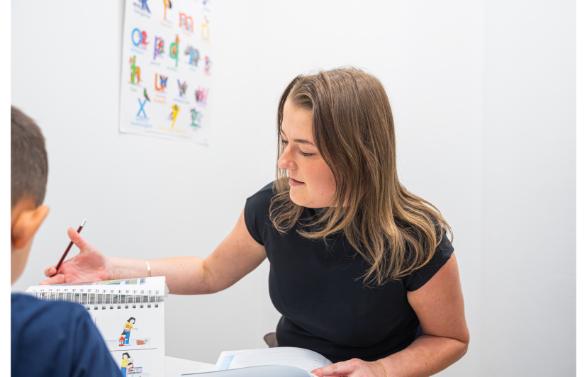
Evidence-based stuttering therapy for children and teenagers, with age-appropriate programs, parent guidance and options for Balmain clinic sessions or telehealth.
Tell us what you’re noticing in your child’s speech.
Paediatric support across ages and stages
Speech Pathology Australia members
Individualised, family-centred plans
NDIS, Medicare & private health
Repeating sounds, syllables or whole words.
Stretching a sound within a word.
Pausing or getting stuck while trying to speak.
Visible effort, switching words or avoiding speaking situations.
A parent-delivered preschool program supported by weekly clinician training and review.
Syllable-timed speech programs that teach a steady rhythmic speaking pattern.
Speech restructuring support for older children and teenagers.
Review speech patterns, family history and the situations where stuttering is most noticeable.
Choose the most suitable approach and explain goals, session expectations and the parent’s role.
Regular sessions plus realistic home practice, with progress reviewed and the plan adjusted over time.
Families do not need to rely only on “wait and see” when they are concerned.
Parents can learn practical ways to support fluency outside the clinic.
Programs can be adapted from preschool through teenage years.
Start with an assessment and a clear recommendation.