Every parent watches eagerly for their child’s first words. But when those words don’t come as quickly as expected, it’s natural to wonder whether you should be concerned or simply patient. If your toddler seems slower to talk than other children their age, you’re not alone. This is one of the most common concerns parents bring to speech pathologists, and it’s a worry we understand completely.
Knowing when late talking is part of normal development and when it signals a need for professional support can feel overwhelming. Here’s what Sydney parents need to know about late talkers and when it’s time to seek help.
What Is a Late Talker?
A late talker is typically a child between 18 and 30 months who develops normally in most ways but speaks fewer words than expected. These children usually walk on time, play appropriately, and understand what you say to them. The delay shows up specifically in how much they’re talking.
Your child may be a late talker if they have:
- Fewer than 50 words by age two
- No two-word combinations by 24 months (like ‘mummy go’ or ‘more milk’)
- Limited speech sounds when attempting words
- Heavy reliance on pointing and gestures instead of words
Late talking is different from a broader language delay, which affects both understanding and speaking.
Will My Late Talker Catch Up?
This is the question every parent asks, and it’s completely understandable. You might hear reassurances from family or friends that their child was the same and turned out fine. Sometimes that’s true, but the picture is more complex than many people realise.
Australian research tracking children’s language development found that while some late talkers do catch up by preschool age, others continue to struggle. What concerns speech pathologists most is that even children who seem to catch up often show subtle difficulties later. These might appear as smaller vocabularies, challenges with reading and spelling, or trouble expressing complex ideas as they move through school.
This doesn’t mean every late talker will face these challenges, but it does explain why speech pathologists recommend assessment rather than simply waiting. Early
support can make a meaningful difference to how your child’s language develops over time.
Signs That Suggest Your Child Needs Assessment
As speech pathologists, we see certain patterns that tend to indicate a child would benefit from professional support. These aren’t hard rules, but they help guide our recommendations.
Children who show several of these signs alongside late talking often benefit most from early intervention:
Family patterns. If you, your partner, or another child had speech or learning difficulties, your toddler has a higher chance of needing support too.
Limited early sounds. Babies who were very quiet with minimal babbling before their first birthday sometimes continue to struggle with speech development.
Hearing concerns. Recurring ear infections can affect how clearly your child hears sounds, which impacts how they learn to talk.
Not copying you. Most toddlers naturally imitate sounds, words, and actions. When this doesn’t happen, it can signal difficulty with language learning.
Few gestures. Toddlers typically point, wave, and use other gestures to communicate before words develop properly.
Trouble with instructions. Difficulty following simple directions like ‘get your shoes’ or ‘give me the ball’ is worth discussing with a speech pathologist.
Limited sound variety. If your child only uses a few sounds like ‘m,’ ‘b,’ or ‘d’ when attempting words, this can indicate a speech sound delay.
If you recognise several of these patterns in your child, an assessment can help you understand what support might help.
When Should You Seek Help?
Trust yourself as a parent. If you’re worried about your child’s talking, that concern deserves professional attention. You know your child better than anyone else.
Definitely reach out to a speech pathologist if your child:
- Has no words by 18 months
- Isn’t combining two words by 2.5 years
- Previously used words but has stopped talking
- Shows frustration when trying to communicate
- Isn’t making progress over several months
- Has difficulty with simple instructions
Getting professional advice doesn’t mean there’s definitely a problem. It gives you clarity and confidence about the best way to support your child’s development.
What Happens During a Speech Assessment?
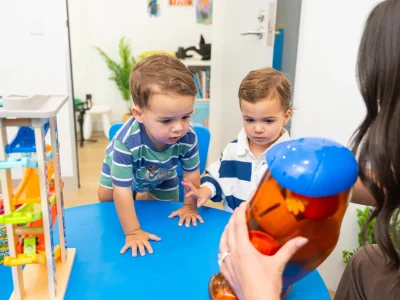
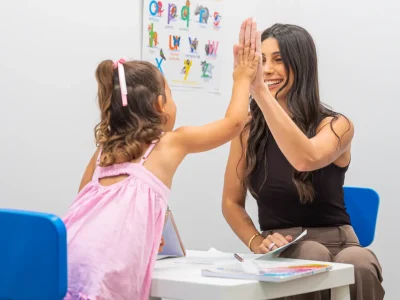
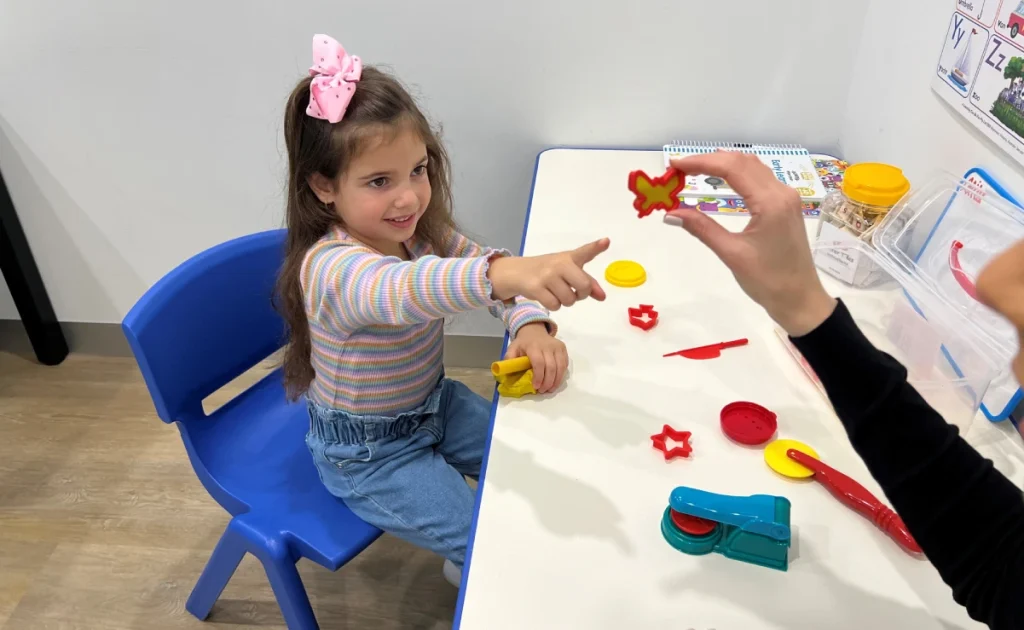
Many parents worry that their toddler won’t cooperate during an assessment, but speech pathologists are used to working with young children. At Kids and Cubs Clinic in Balmain, assessments look like playtime.
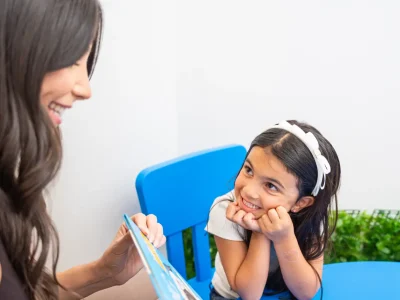
Your speech pathologist will play with your child using toys and activities to observe how they communicate. This relaxed approach helps us see what words your child uses and understands, how clearly they produce sounds, and how they engage socially.
We’ll also chat with you about your child’s development, your family history, and any concerns you have. After the speech assessment, you’ll receive a clear explanation of your child’s current skills and practical strategies to support their language growth, whether therapy is recommended or not.
How Parents Can Support Language Development
Whether you’re waiting for an assessment or supporting ongoing therapy, these everyday strategies help encourage your toddler’s language growth:
Talk throughout the day. Narrate your activities during mealtimes, bath time, and play. Simple commentary like ‘let’s put on your blue shirt’ or ‘I’m cutting the banana’ gives your child constant language exposure.
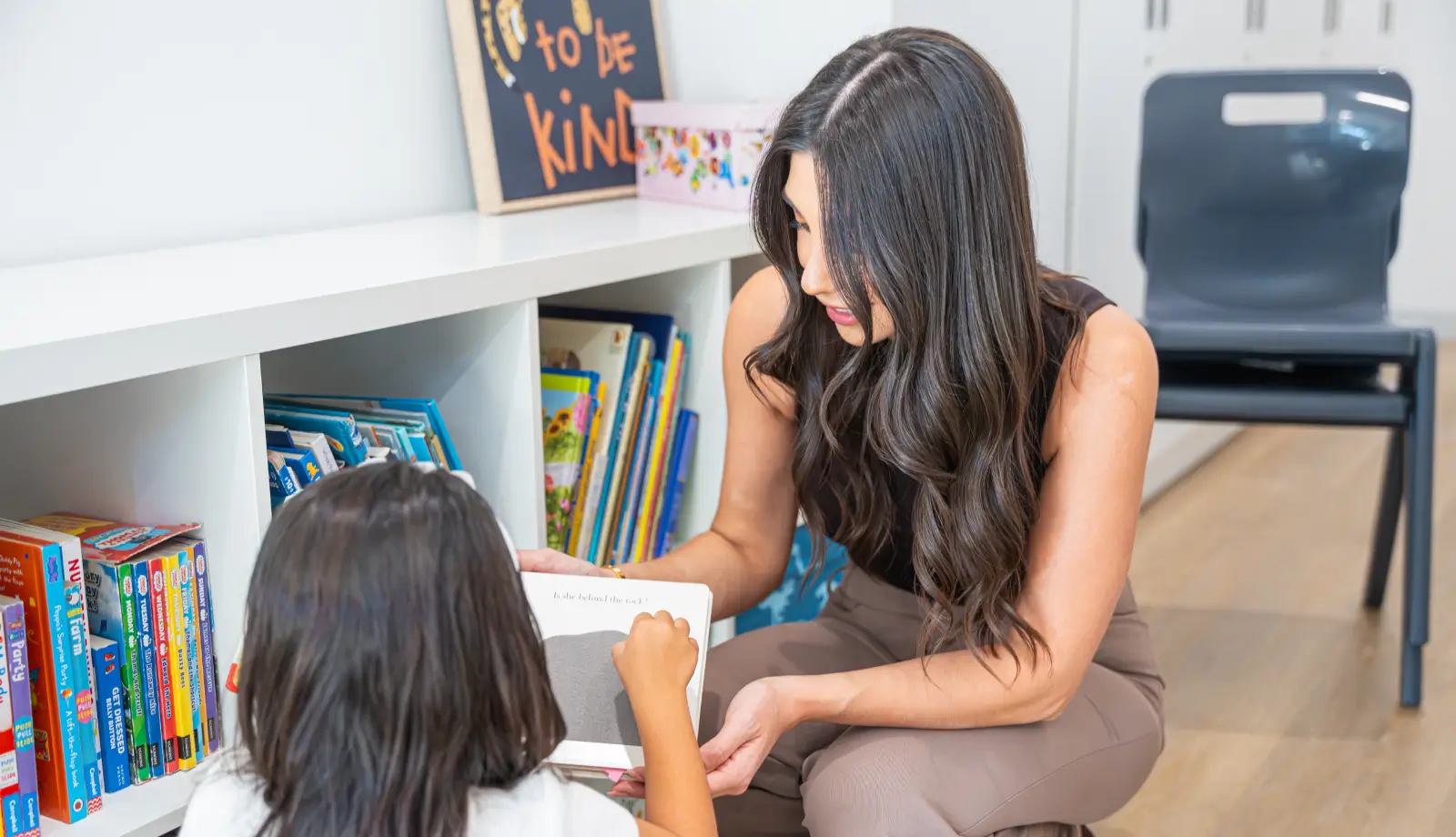
Read together daily. Picture books are perfect for learning new words. Point to images, name them, and pause to let your child attempt words too. Even just a few minutes before bed makes a difference.
Expand their attempts. When your child says ‘ball,’ respond with ‘yes, big blue ball.’ This models how to build longer phrases without pressure or correction.
Follow their interests. Play with what captures their attention and add language to their focus. If they love cars, talk about colours, actions, and sounds as they play.
Sing songs and rhymes. Repetitive songs help children learn speech rhythm and new vocabulary in an enjoyable way. Most toddlers love ‘Twinkle Twinkle’ and ‘The Wheels on the Bus’ long before they can sing along.
Create communication opportunities. Put favourite toys just out of reach so your child needs to ask. Offer choices between two options. These small moments encourage talking.
For more tips and free resources, visit our downloads page.
Speech Therapy for Late Talkers in Sydney
At Kids and Cubs Clinic, our paediatric speech pathologists work with late talkers every day. We understand the worry parents feel and the questions you’re asking yourself. Our approach is play-based and family-focused because toddlers learn best when they’re engaged and having fun.
Sessions use toys, games, and activities matched to your child’s interests. We also work closely with you to give you strategies for home, ensuring your child gets consistent support throughout the week, not just during appointments.
Our clinic accepts NDIS, Medicare (with a Chronic Disease Management Plan from your GP), and private health insurance. We offer in-clinic sessions at our Balmain location and telehealth appointments for families across Sydney’s Inner West.
Taking the First Step
If you’re worried about your child’s late talking, the best first step is simply reaching out for professional assessment. Many parents tell us they wish they’d contacted us sooner rather than spending months worrying.
Early support during these language-learning years can make a genuine difference to how your child communicates and learns. Even if your child is just a late bloomer who’ll catch up naturally, an assessment gives you peace of mind and helpful strategies to support their development at home.
Remember, seeking help early doesn’t mean something is definitely wrong. It means you’re being proactive and giving your child the best possible foundation for communication, confidence, and learning.
Ready to support your child’s speech development? Contact Kids and Cubs Clinic on (02) 9166 7622 to book a speech assessment at our Balmain clinic.
Our experienced speech pathology team is here to answer your questions and help your child find their voice.