If you’ve noticed your child repeating sounds, stretching out words, or struggling to get their words out, you’re not alone. Stuttering affects around 1 in 12 preschool-aged children in Australia, and many parents in Sydney’s Inner West reach out to us at Kids and Cubs Clinic with the same concerns.
The good news? With the right understanding and support, most children can overcome stuttering or manage it effectively. Let’s look at what causes stuttering, when you should be concerned, and the proven treatments available right here in Balmain and the Inner West.
What Is Stuttering?
Stuttering, also known as stammering or dysfluency, is a speech fluency disorder that disrupts the natural flow of speech. It typically begins in children under five years old as they develop their language skills.
Children who stutter know exactly what they want to say, but experience interruptions in their speech. These disruptions can appear as:
- Repetitions: Repeating sounds, syllables, or words (for example, “b-b-b-ball” or “can-can-can I play?”)
- Prolongations: Stretching out sounds within a word (such as “ssssssnake” or “Caaaaaaan I go?”)
- Blocks: Pausing or stopping completely before or during a word, where no sound comes out
You might also notice your child showing physical signs of struggling to speak, like rapid eye blinking, lip trembling, facial grimacing, or tension in their face and body. These behaviours are involuntary and can be particularly frustrating for children who understand exactly what they want to communicate.
What Causes Stuttering in Children?
Stuttering occurs because of differences in how the brain processes and controls speech. It’s important to understand that stuttering is not caused by parenting, anxiety, or your child’s intelligence. It’s a neurodevelopmental condition influenced by several factors.
Genetics and Family History: Stuttering often runs in families. If you or other relatives experienced stuttering in childhood, your child may be at higher risk.
Brain Processing Differences: Children who stutter have slight differences in how their brains coordinate the complex movements needed for speech production. Think of it as a temporary “glitch” in the connection between planning what to say and actually saying it.
Developmental Timing: Stuttering typically emerges during periods of rapid language development, when children are learning to form longer sentences and express more complex ideas. This surge in language skills can sometimes overwhelm the speech production system.
Environmental Factors: While they don’t cause stuttering, stress, tiredness, excitement, or high-pressure situations can make existing stuttering symptoms worse.
Boys are more likely to develop persistent stuttering than girls, though researchers are still investigating why this occurs.
When Should You Be Concerned?
Many children experience some speech disfluencies as a normal part of language development. In our clinic, we regularly see children who go through temporary phases of repeating words or hesitating as they learn to express themselves. Still, certain signs indicate it’s time to seek professional assessment from a speech pathologist.
Consider booking an assessment if:
- Stuttering has continued for more than 4 to 6 weeks
- Stuttering is becoming more frequent or severe over time
- Your child shows visible struggle, tension, or physical behaviours when speaking
- Your child is aware of their stuttering and shows frustration or anxiety about talking
- There’s a family history of persistent stuttering
- Stuttering is affecting your child’s participation at childcare, school, or in social situations
- Your child is approaching school age and still stuttering regularly
The current best practice is to begin stuttering treatment as soon as possible. While many children naturally outgrow stuttering, we cannot predict which children will recover on their own. Early intervention gives your child the best chance of developing fluent, confident speech.
Proven Treatments for Stuttering
The most effective treatment for preschool-aged children who stutter is the Lidcombe Program, a behavioural approach developed right here in Sydney. This evidence-based program has shown strong success rates for young children working towards fluent speech.
How the Lidcombe Program Works:
Parents and carers are trained by a qualified speech pathologist to deliver therapy in the child’s natural environment at home. You’ll learn to gently acknowledge when your child speaks smoothly and offer supportive feedback when stuttering occurs. This approach helps children develop fluent speech patterns in everyday conversations, not just in therapy sessions.
The program is particularly effective for children under six years old and can also benefit school-aged children who stutter.
What to Expect in Speech Therapy:
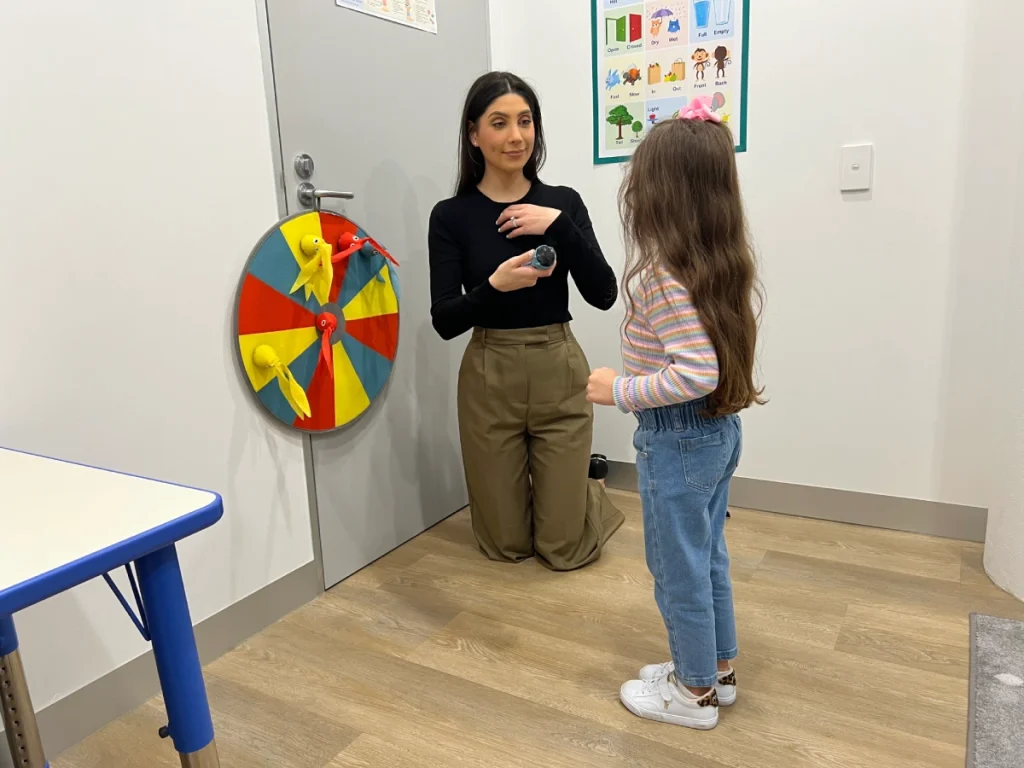
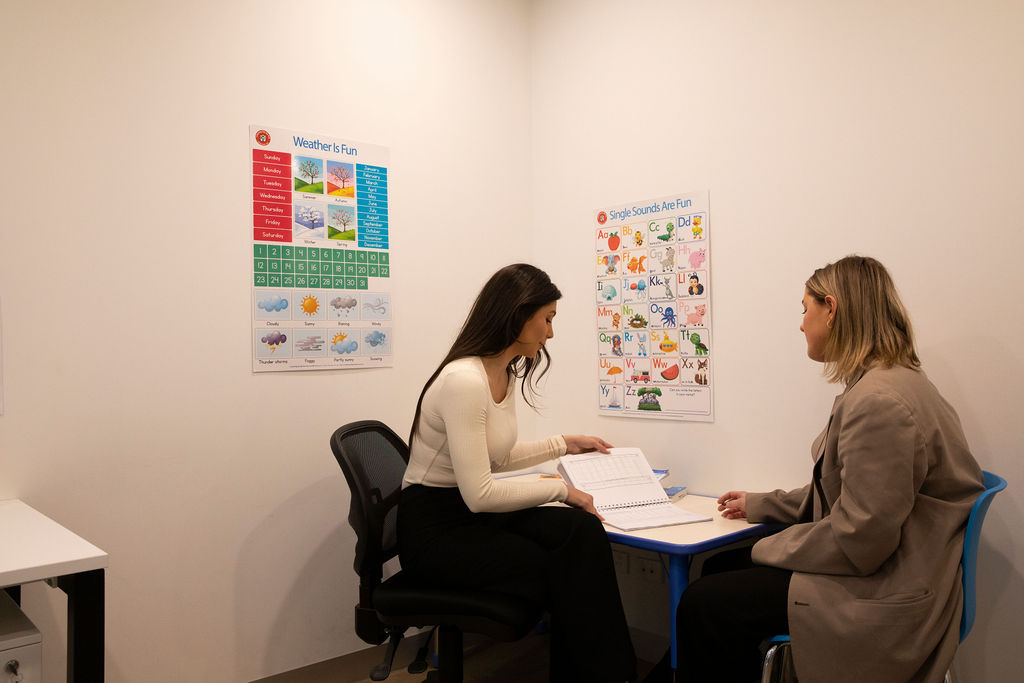
At Kids and Cubs Clinic in Balmain, your child’s first appointment includes a detailed speech and language assessment. Our paediatric speech pathologist will observe how your child communicates, identify their specific stuttering patterns, and create a personalised therapy plan based on their individual needs.
Our therapy sessions are play-based, structured, and engaging so children feel comfortable while learning new speech skills. We track your child’s progress carefully and share simple home activities to reinforce fluency techniques between sessions. Many families tell us their children actually look forward to sessions because they feel supported rather than pressured.
For school-aged children and adolescents, treatment may also focus on speech restructuring techniques to improve fluency and strategies to manage any anxiety around speaking.
How Parents Can Support Their Child
While professional therapy creates the foundation for treatment, what you do at home makes a significant difference. Here are practical strategies to support your child:
Create a low-pressure communication environment. Set aside calm, one-on-one talking time each day where your child can chat about topics they enjoy without interruption.
Give your child time to speak. Resist the urge to finish their sentences or rush them. Maintain eye contact and show patience, focusing on what they’re saying rather than how they’re saying it.
Slow down your own speaking rate. When you speak more slowly and use natural pauses, your child is more likely to match this relaxed pace.
Avoid unhelpful comments. Don’t tell your child to “slow down,” “take a breath,” or “think before you speak.” These instructions can increase pressure and worsen stuttering.
Talk openly about stuttering. If your child is aware of their stuttering, have honest, supportive conversations. Let them know stuttering is nothing to be ashamed of and that you’re there to help.
Respond to the message, not the stuttering. When your child communicates something, respond to their ideas rather than commenting on how they said it. This helps build their confidence and keeps communication positive.
Why Early Intervention Matters
Treatment for stuttering is most effective in early childhood. Starting therapy early can reduce or eliminate stuttering, prevent it from becoming a lifelong condition, and build your child’s communication confidence before they start school.
Without support, children who stutter may continue stuttering into adulthood, develop reduced confidence when speaking, avoid communication situations, and potentially experience challenges with self-esteem. We’ve worked with many families who wished they’d sought help sooner, which is why we encourage parents to trust their instincts.
At Kids and Cubs Clinic, we support NDIS, Medicare, and private health rebates to make accessing evidence-based stuttering therapy easier for families across Balmain and the Inner West. Our team guides you through the process so your child can begin therapy without unnecessary delays.
Take the Next Step
If you’re concerned about your child’s speech fluency, don’t wait. With consistent therapy and family support, many children develop clearer speech and stronger communication confidence.
Our paediatric speech pathologists in Balmain specialise in helping children overcome stuttering using proven, research-backed methods. We work closely with families to create personalised therapy plans that fit into your daily life and deliver real results.
Book a stuttering assessment at Kids and Cubs Clinic today and give your child the gift of confident, fluent communication.