Watching your autistic child struggle to express themselves can be one of the hardest parts of parenting. Whether your child is not yet talking, uses only a few words, or speaks fluently but finds conversation difficult, speech therapy can open new doors for communication, connection, and confidence.
This guide walks you through what speech therapy for autistic children actually looks like, when to start, and how to give your child the best possible support at every stage.
How Autism Affects Speech and Communication
Autism Spectrum Disorder (ASD) affects how a child processes information, interacts with others, and uses language. Every autistic child is different, but communication differences sit at the core of the diagnosis.
Some autistic children are non-speaking or minimally speaking. Others develop a large vocabulary early but struggle with the social side of conversation, such as knowing when to speak, how to take turns, or how to interpret tone and body language. Many fall somewhere in between.
Speech therapy for autistic children looks beyond simply learning to talk. It builds the full picture of communication, including understanding language, expressing needs, using gestures, reading social cues, and developing meaningful connections with others.
Signs Your Autistic Child May Benefit From Speech Therapy
You do not need a formal diagnosis to start speech therapy. If you have noticed any of the following signs, it is worth booking a speech assessment:
✓ Limited or no spoken words by age two
✓ Difficulty following simple instructions
✓ Repeating words or phrases without clear meaning (echolalia)
✓ Trouble making eye contact or responding to their name
✓ Struggling to start or maintain conversations
✓ Difficulty understanding tone, humour, or figurative language
✓ Frustration or meltdowns linked to being unable to communicate a need
✓ Preference for scripted speech from shows, videos, or books
Early support gives your child the best chance to build strong communication foundations. Even if you are unsure whether the signs are significant, an assessment brings clarity.
What Speech Therapy for Autistic Children Actually Looks Like
Speech therapy for autistic children is not about forcing your child to talk. It is about meeting your child where they are and building communication skills at their own pace, in a way that respects how they think and process the world.
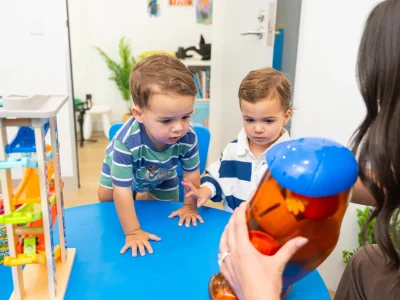
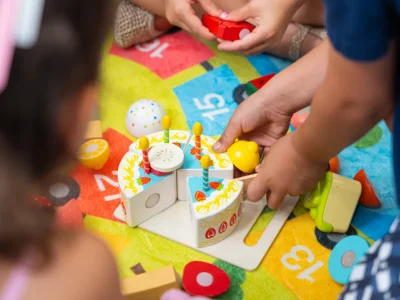
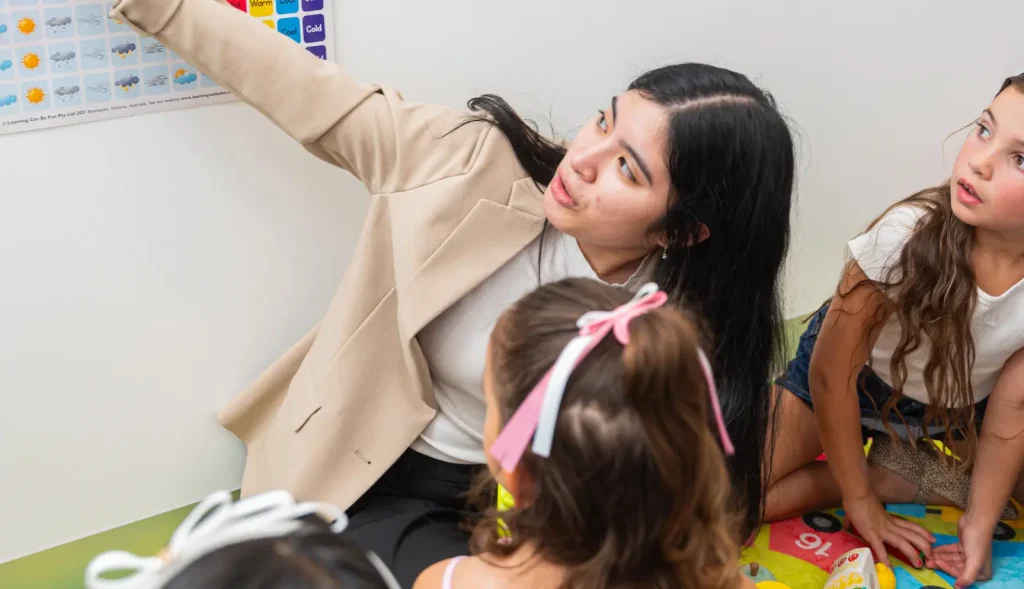
Sessions are typically play-based for younger children and more structured for school-age children and teens. At Kids and Cubs Clinic, our paediatric speech pathologists use activities your child already enjoys as the starting point for building language, then gently stretch those skills over time.
Therapy often focuses on several areas at once, depending on your child’s profile:
✓ Receptive language – understanding what others say
✓ Expressive language – using words, signs, gestures, or devices to communicate
✓ Social communication – turn-taking, joint attention, and reading social cues
✓ Pragmatic skills – using language appropriately in different situations
✓ Play skills – because play is how children practise communication
Key Speech Therapy Approaches for Autistic Children
There is no single “autism speech therapy” method. The right approach depends on your child’s age, communication profile, sensory needs, and personality. Some of the most widely used, evidence-based approaches include:
Naturalistic Developmental Behavioural Interventions (NDBI)
These blends play-based learning with structured techniques, teaching communication through everyday interactions rather than drills. They work well for toddlers and preschoolers.
Social Communication Interventions
Designed for school-age children who talk fluently but struggle with the social side of language. These help with conversation skills, understanding perspectives, and building friendships.
PECS (Picture Exchange Communication System)
A visual communication system where children exchange pictures for items they want, gradually building toward sentences and spontaneous communication.
AAC (Augmentative and Alternative Communication)
For non-speaking or minimally speaking children, AAC devices provide a voice through pictures, symbols, or speech-generating apps on a tablet. AAC does not stop children from speaking. Research shows it often supports speech development.
Your child’s therapist will typically combine several approaches based on what works best for them.
The Role of Parents in Autism Speech Therapy
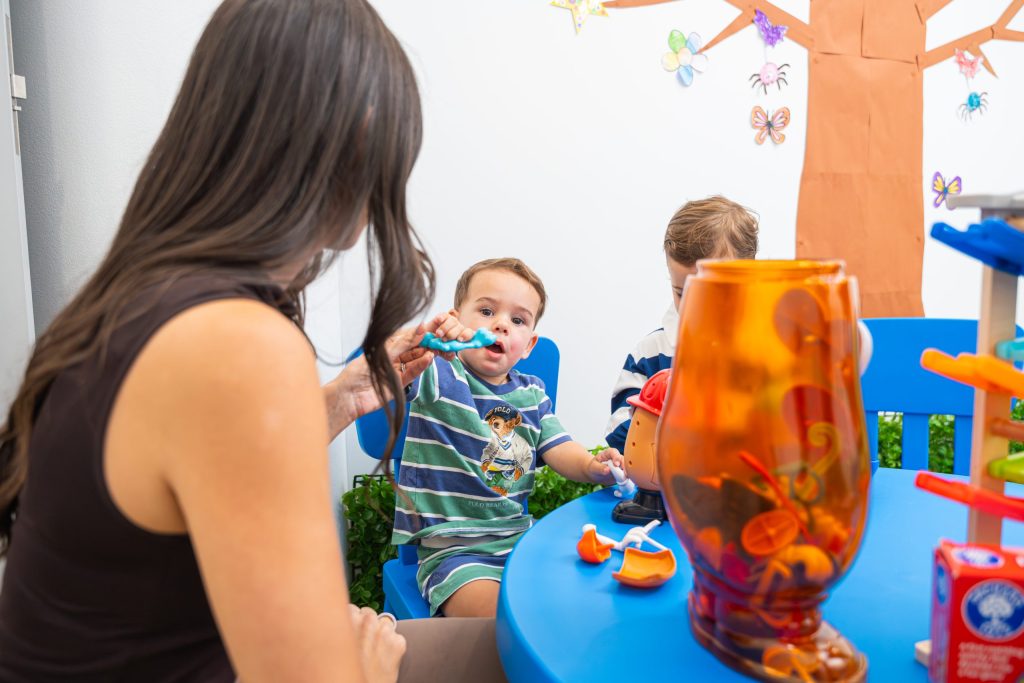
Parents are the most important people in a child’s communication development. You spend far more time with your child than any therapist ever will, which makes what happens at home the real engine of progress.
A good paediatric speech pathologist will coach you as much as they work with your child. You will learn how to:
✓ Follow your child’s lead during play
✓ Use visual supports and simple language
✓ Recognise and respond to communication attempts, even non-verbal ones
✓ Build communication opportunities into daily routines like meals, bath time, and getting dressed
✓ Model language your child can copy at their level
This “parent as partner” approach is one of the most consistent predictors of long-term outcomes. Children whose parents are actively involved in therapy tend to make faster, more sustainable progress.
When Should You Start Speech Therapy?
The short answer is: as early as possible. Research is clear that early intervention gives autistic children the strongest foundation for communication, learning, and social development.
That does not mean it is ever too late. Speech therapy makes meaningful differences at every age, whether your child is a toddler just starting to babble, a preschooler with a few words, a school-age child working on conversation, or a teenager building workplace communication skills.
If your child is under six, therapy for toddlers and preschoolers is often the right entry point. For older children, therapy for school-aged children is designed specifically for their stage.
Supporting Non-Speaking Autistic Children
If your child is non-speaking or minimally speaking, you may worry that speech therapy will not help them. That is not the case. Communication is not the same as talking, and every child can learn to communicate.
For non-speaking children, therapy typically focuses on building a functional communication system first, whether through gestures, signs, visual support, or AAC. Many children who begin with AAC go on to develop spoken language over time. Others use AAC as their primary voice for life. Both outcomes are successes.
Giving your child a reliable way to express needs and feelings often reduces frustration, meltdowns, and behavioural challenges, because your child can finally tell you what they want, feel, or need.
What to Expect From Your First Appointment
Booking a first appointment can feel like a big step. Here is what usually happens.
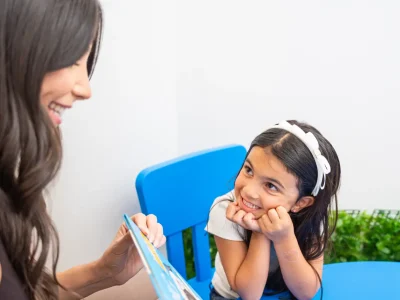
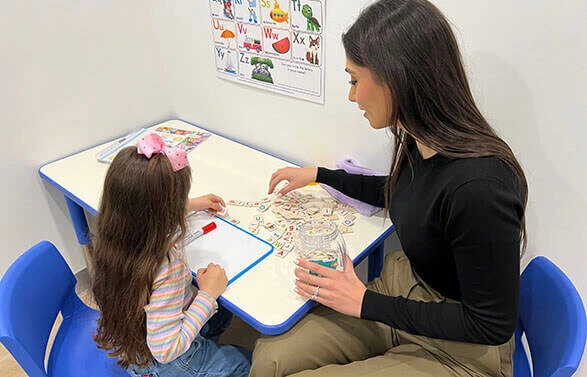
Your child’s initial speech assessment is a relaxed, play-based session where the therapist observes how your child communicates, understands language, and interacts. You will be asked about your child’s history, current strengths, challenges, and what you want to work on.
After the assessment, you receive a written summary, our clinical impression, and a recommended plan. You will know exactly what therapy will look like, how often you will attend, and what your role at home will be.
Therapy sessions themselves are engaging, warm, and paced for your child. Progress is reviewed regularly, and the plan is adjusted as your child grows.
Choosing the Right Paediatric Speech Pathologist
The right therapist for your autistic child understands autism deeply, uses evidence-based approaches, respects your child’s differences rather than trying to “fix” them, and treats you as a partner in the process.
Look for a clinic that:
✓ Focuses exclusively on paediatric care
✓ Uses neuro-affirming, evidence-based approaches
✓ Offers a range of therapy options, including AAC, where needed
✓ Provides flexible delivery, such as in-clinic and telehealth options
✓ Supports NDIS, Medicare, and private health funding
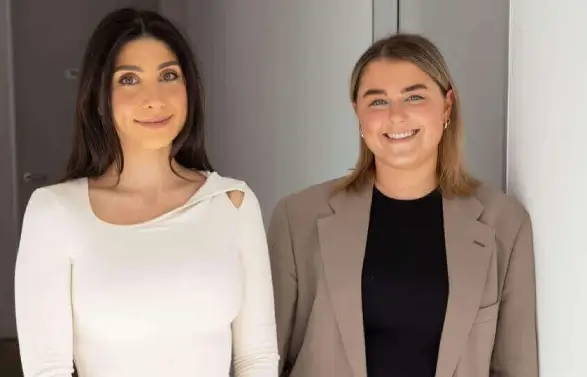
You can meet our team to see the paediatric speech pathologists who work with autistic children across Sydney.
Give Your Child the Communication Support They Deserve
Speech therapy will not change who your autistic child is, and it should not try to. What it can do is give your child the skills, tools, and confidence to communicate their world, connect with the people who love them, and build a future on their own terms.
If you are ready to take the next step, our team at Kids and Cubs Clinic is here to help. Our Paediatric Speech Pathologists in Sydney offer evidence-based, family-centred therapy tailored to your child’s unique communication profile. Book an assessment today and take a supported first step toward clearer, more confident communication.