You ask your toddler to grab their shoes, and they trot off and bring them back. You say it’s bath time, and they head for the bathroom. They clearly get what you’re saying. So why aren’t they saying much back?
If this sounds like your household, you’re not alone. Plenty of parents in Balmain and across the Inner West come to us with the same worry: their two year old seems to understand everything, yet only has a handful of words. It’s a confusing spot to be in, because the understanding feels reassuring while the quiet feels concerning. Let’s walk through what this pattern usually means and when it’s worth getting some support.
Understanding Comes Before Talking
Here’s something that helps a lot of parents relax a little: understanding always develops ahead of speaking. Children learn what words mean well before they can produce those words themselves.
Your child needs to know what a ball is before they can say “ball,” so a toddler who follows directions and responds to their name is showing you their brain is doing exactly what it should on the comprehension side.
Speech pathologists split language into two parts. Receptive language is what your child understands. Expressive language is what your child can actually say. When a two year old follows instructions well but speaks very little, we often see stronger receptive skills sitting alongside slower expressive skills. That gap between the two is one of the most common things we assess in toddlers, and strong understanding is genuinely a good sign to build on.
What "Enough" Words Looks Like at Two
It helps to have a rough guide for where things sit at this age. By around 24 months, most toddlers use at least 50 words and start putting two words together, like “more juice” or “daddy go.” Words don’t need to be perfectly clear to count. If your child says “ba” for ball every time they see one, that counts as a word because they use it with meaning.
A few things we look at beyond the word count:
- Whether your child combines two words, not just uses single words
- Whether they use words to ask for things, not only point or lead you by the hand
- Whether they copy new words when you model them
- How they communicate without words, through pointing, showing you things, and eye contact
A toddler who understands you, points, shares, and copies sounds but simply hasn’t found their words yet often has what we call an expressive language delay. Working with families every week, we find these non-verbal communication signals tell us just as much as the words themselves, which is why we pay close attention to them during an assessment.

Why Some Toddlers Talk Later
There isn’t a single reason a child talks later than their peers, and often it’s a mix of factors. Some of the more common ones include a straightforward expressive language delay, reduced hearing (even glue ear from frequent colds can quietly affect how clearly a child hears words), or differences in how the mouth, lips, and tongue coordinate to form sounds.
For some children, being a late talker is temporary and they catch up. For others, the quiet is an early sign of something worth supporting sooner, such as autism or a motor speech difficulty.
The tricky part, and the honest truth, is that current research can’t reliably tell us in advance which late talkers will catch up on their own and which won’t. That uncertainty is exactly why we lean towards checking early rather than waiting to see. If you’d like guidance tailored to your child, our team offers speech therapy for understanding and using language designed around each toddler’s individual profile.
When to Check In With a Speech Pathologist
A good rule of thumb: if your two year old is using fewer than 50 words and isn’t yet joining two words together, it’s worth a conversation with a speech pathologist. You don’t need to wait until your child “falls behind” their friends, and you certainly don’t need to wait for them to catch up on their own before booking an assessment.
The old “wait and see” approach has lost favour for good reason. Toddlerhood is a window where children learn language quickly, and early support makes the most of it. In our experience, parents who act on a niggling worry rarely regret it, even when the assessment turns out to be reassuring. Getting clarity is valuable in itself.

What Happens in an Assessment
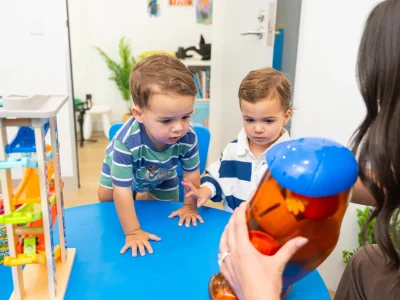
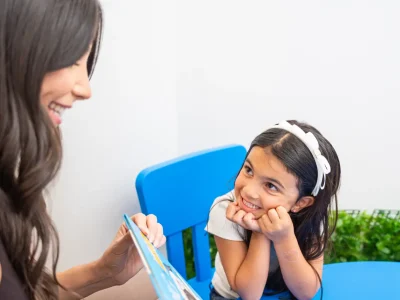
If you do decide to come in, the first appointment is relaxed and play-based rather than clinical or intimidating. Our speech pathologist watches how your child plays, listens, and communicates, and asks you plenty of questions about their development at home.
We often suggest a hearing check too, since even mild hearing issues can shape how a child picks up sounds and words.
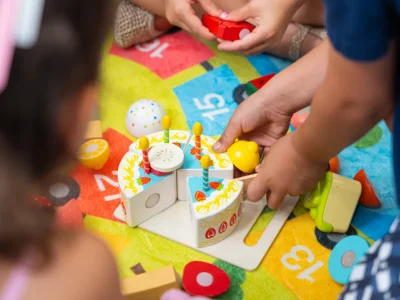
From there, if therapy is the right step, sessions are built around play because that’s how toddlers learn best. Much of the work also happens with you, the parent, since the language-rich moments at home during meals, bath time, and reading together do the heavy lifting between sessions. We’ll show you practical ways to model words, follow your child’s lead, and turn everyday routines into chances to talk.
A Few Things You Can Do at Home Today
If you do decide to come in, the first appointment is relaxed and play-based rather than clinical or intimidating. Our speech pathologist watches how your child plays, listens, and communicates, and asks you plenty of questions about their development at home.
We often suggest a hearing check too, since even mild hearing issues can shape how a child picks up sounds and words.
From there, if therapy is the right step, sessions are built around play because that’s how toddlers learn best. Much of the work also happens with you, the parent, since the language-rich moments at home during meals, bath time, and reading together do the heavy lifting between sessions. We’ll show you practical ways to model words, follow your child’s lead, and turn everyday routines into chances to talk.
The Takeaway
A two year old who understands everything but isn’t talking much is showing you a real strength in their comprehension, and that’s worth holding onto.
The gap between understanding and speaking is common, often very manageable, and responds well to early support. Trust your instincts as a parent. If something feels off, a quick check brings either helpful answers or genuine peace of mind.
If you’re in Balmain or the wider Inner West and you’d like to talk it through with someone who works with toddlers every day, get in touch with our team. We’re happy to answer your questions and help you work out the right next step for your little one.