Hearing your baby say “mama” for the first time is a moment most parents never forget. It is also one of the questions we hear most often from families at our Balmain clinic. Usually a second question follows straight away: “Is my baby on track?”
The short answer is that most babies start making “mama” sounds between 6 and 9 months. They usually start using “mama” to mean you closer to their first birthday. Every baby develops at their own pace, so here is what each stage looks like and when it is worth checking in.
Babbling First, Meaning Later
Parents often mix up two separate milestones.
The first is babbling “ma-ma-ma”, which usually appears between 6 and 9 months. At this stage your baby is playing with sounds. They are learning what their lips and voice can do, and the sound is not yet linked to you.
The second is a meaningful “mama”, which usually appears between 10 and 14 months. This is when your baby says it to you on purpose. They might look at you as they say it, reach for you, or call out when you leave the room.
Both stages are real progress, and the first one builds the second.
How Babies Build Up to “Mama”
0 to 3 months: listening and cooing
Your newborn is tuning in to your voice long before they can talk. Soft cooing and gurgling sounds are their first attempts at taking turns in a conversation.
4 to 6 months: playing with sounds
Babies start blowing raspberries, squealing and laughing. You may hear a contented “mmm” during feeds as they press their lips together.
6 to 9 months: repeated babble
Strings like “mamama”, “bababa” and “dadada” start to appear. Lip sounds such as m, b and p often come early because babies can see them on your face and feel them on their own lips.
10 to 14 months: first real words
Your baby starts to understand familiar names, waves bye-bye and points at things they want. First words usually appear around now, and “mama” is often one of them.
Why Some Babies Say “Dada” First
If your baby says “dada” first, please don’t take it personally. It is very common, and it has nothing to do with favourites.
The “d” sound can come more easily for some babies. The parent at home all day also tends to say “Where’s Dada?” far more often than they name themselves.
In many Australian homes, babies hear “Mum” rather than “Mama”, so their first attempt might sound like “mum-mum” or “ma”. In bilingual families, the word for mum may be completely different, such as “amma” or “mamá”. All of these count. Hearing more than one language does not confuse babies. They are simply learning more than one word for the same person.
What Counts as a First Word?
When we assess young children in clinic, we count a word when your baby uses it:
- The same way each time
- More than once
- For the same person or thing
Approximations count too. “Ma” for mama or “ba” for ball is a genuine word if your baby uses it consistently. Gestures like pointing, waving and lifting their arms to be picked up are also important parts of communication. They often show up just before first words.
Simple Ways to Encourage “Mama” at Home
You don’t need flashcards or special programs. Everyday moments work best.
- Get face to face. Babies learn sounds by watching your mouth, so get down to their eye level during play and nappy changes.
- Name yourself in daily routines. Say things like “Mama’s here” or “Mum’s got your milk” so the word is linked to you.
- Copy their babble, then pause. If your baby says “ba-ba”, say it back and wait. That pause gives them a turn.
- Sing and play peekaboo. Repetitive songs and games make sounds predictable and fun.
- Turn off background TV. A quieter room makes it easier for your baby to tune in to your voice.
- Celebrate attempts. Smile and respond warmly rather than asking them to “say mama” on demand.
In our sessions with young families, some of the biggest changes come from small adjustments, like waiting a few extra seconds for baby to take their turn.
When to Talk to a Speech Pathologist
Every baby is different, and a few weeks either way is usually nothing to worry about. It is worth getting advice if your baby:
- Is not babbling with sounds like “ba” or “ma” by around 9 to 10 months
- Doesn’t respond to their name or to sounds around them
- Isn’t using gestures such as pointing or waving by about 12 months
- Has no words by 15 to 18 months
- Stops using sounds or words they used to say
If your baby has had a lot of ear infections, ask your GP about a hearing check. Even mild, temporary hearing loss can make speech sounds harder to pick up. If your baby was born early, use their corrected age when you compare milestones.
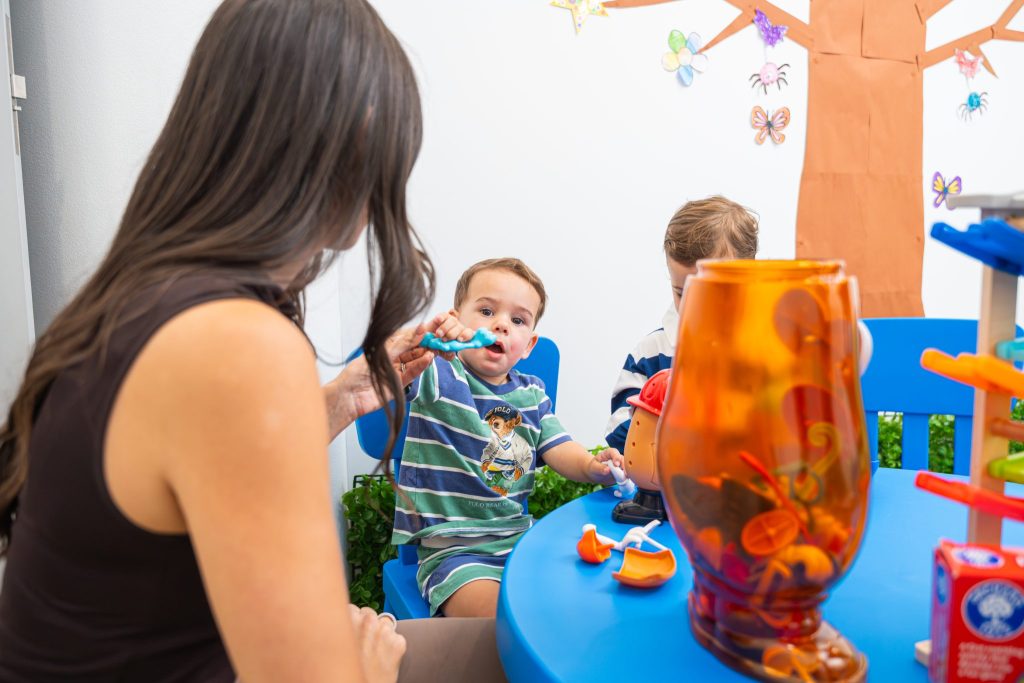
Your child and family health nurse, GP or a paediatric speech pathologist can all help. You don’t need to wait for a problem to be obvious. An early chat often gives parents peace of mind, and if support is needed, starting sooner makes the most of these early years. Our speech therapy for toddlers is built around play, and parents are part of every session so the progress keeps going at home.
How Kids and Cubs Clinic Can Help
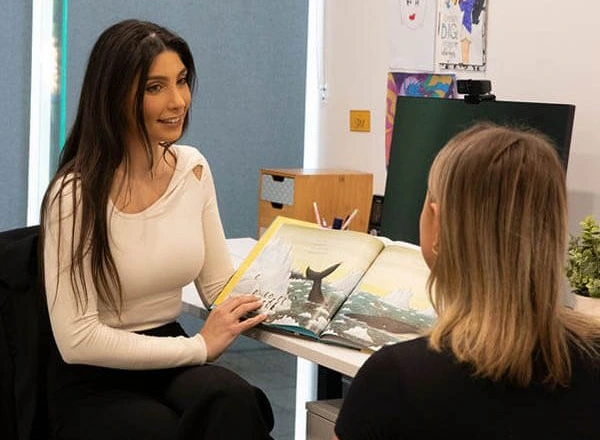
Kids and Cubs Clinic is led by Samantha Malfitano, our Director and Principal Speech Pathologist. Samantha trained at the University of Sydney and spent five years at Liverpool Hospital assessing and treating children with communication, feeding and developmental difficulties. Her work there included ex-premature babies and families from culturally and linguistically diverse backgrounds, and early language development remains one of her special interests.
There is no minimum age for an assessment. We see families in our Balmain clinic and via telehealth, and we accept NDIS, Medicare Chronic Disease Management plans and private health rebates.
Have Questions About Your Baby’s First Words?
If you are wondering whether your baby’s babbling is on track, we are happy to help. Contact our team or call (02) 9166 7622 to book a relaxed, play-based assessment with one of our paediatric speech pathologists.