Most parents remember the moment their baby first said “mama” or “dada”. What many don’t realise is that talking starts long before that first word. From the early weeks, your baby is listening, watching faces and practising the sounds that build towards real speech.
At Kids and Cubs Clinic in Balmain, parents of young babies often ask us what is normal in the first year. This guide covers what to expect from birth to around 12 months, how you can help at home, and when it makes sense to check in with a speech pathologist.
Key Takeaways
- Most infants say their first word around 12 months, give or take a few months.
- Communication starts at birth through crying, cooing, smiling and eye contact.
- Babbling usually appears between 6 and 9 months and is a big step towards words.
- Gestures like pointing and waving matter just as much as sounds.
- If your baby isn’t babbling by 9 months or isn’t responding to sounds, an assessment can give you clear answers.
So, When Do Infants Say Their First Word?
Most babies say their first real word somewhere around their first birthday. Some get there a little earlier, and plenty arrive a few months later with no cause for concern. A first word doesn’t need to sound perfect. If your baby uses the same sound for the same thing each time, like “ba” for ball or “wa” for water, that counts.
In our clinic, we look less at the exact date and more at the steps leading up to it. A baby who is cooing, babbling, pointing and responding to their name is usually well on the way, even if words haven’t arrived yet.
Infant Speech Milestones From Birth to 12 Months
Every baby moves through these stages at their own pace, so treat the ages below as a rough guide rather than a strict timetable.
0 to 3 Months: Crying, Cooing and Eye Contact
Crying is your newborn’s first way of telling you something. Within the first couple of months, you’ll hear soft vowel sounds like “ooh” and “aah”, known as cooing. Your baby will also study your face, smile back at you and settle when they hear a familiar voice.
3 to 6 Months: Vocal Play and Laughter
Around this stage, babies discover they can make all kinds of noises. Expect squeals, giggles, raspberries and gurgles. They start turning towards voices and may “answer” you with sounds when you pause, which is their first taste of conversation.
6 to 9 Months: Babbling Begins
This is when many parents hear repeated syllables such as “bababa”, “mamama” or “dadada”. These sounds usually come before your baby links them to a person or object. Babbling gives your baby practice moving their lips, tongue and jaw together, which is exactly what speech needs.
9 to 12 Months: Gestures, Understanding and First Words
Before their first birthday, babies often babble with the rise and fall of real speech, so it can sound like they’re chatting in their own language. They start to wave, point, clap and reach to show you what they want. Many understand simple words like “no”, “bye bye” and their own name, and first words often appear around now.
Why Understanding Comes Before Talking
Babies understand far more than they can say. Long before the first word, your infant is learning that sounds carry meaning by hearing you name things during feeds, nappy changes and bath time.
When we assess very young children, we spend as much time on what they understand and how they use gestures as on the sounds they make. A baby who follows your point, looks at the dog when you say “dog” or lifts their arms to be picked up is building the base for talking.
Simple Ways to Encourage Your Baby to Talk
You don’t need special toys or flashcards. Everyday routines give your baby the best practice.
- Talk through your day. Describe what you’re doing as you dress, feed or bathe your baby.
- Copy their sounds. If your baby says “ba”, say “ba” back and wait. This back and forth teaches turn-taking.
- Pause and wait. Give your baby time to reply with a sound, smile or wriggle.
- Read and sing together. Board books, nursery rhymes and action songs build listening and rhythm.
- Get face to face. Babies learn by watching your mouth and expressions, so come down to their level.
- Keep screens to a minimum. Real, face-to-face talk is how babies learn language best.
Signs Your Infant May Benefit From a Speech Assessment
Most babies move through these stages without trouble, and some variation is normal. It’s still worth getting advice if your baby:
- Doesn’t startle or turn towards sounds and voices by around 6 months
- Isn’t babbling with repeated sounds by around 9 months
- Isn’t pointing or waving by 12 months
- Doesn’t respond to their name by 12 months
- Has stopped making sounds or using skills they used to have
- Has frequent ear infections or didn’t pass the newborn hearing screen
Hearing is one of the first things we check, because babies need to hear speech clearly to learn it. If something is worrying you, a speech assessment can show where your baby is at and whether any support would help. Our team sees children from birth, so there’s no need to wait until your child is a toddler.
A Note for Parents of Premature Babies
If your baby was born early, use their corrected age when checking milestones. A 9 month old born 2 months early, for example, would be compared with a 7 month old. Our Principal Speech Pathologist, Samantha Malfitano, spent five years at Liverpool Hospital supporting children including ex-premature babies, so we understand the extra questions these families often have.
How Kids and Cubs Clinic Supports Infants and Families
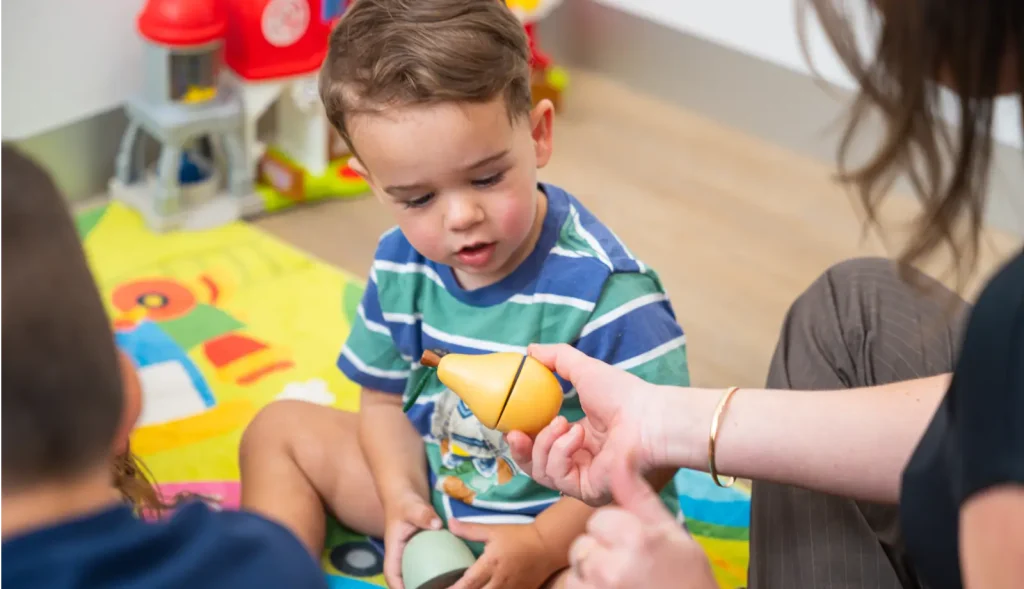
Seeing a speech pathologist with a baby can sound unusual, but early support is mostly about guiding parents. We observe how your baby plays, listens and communicates, talk through your concerns, and give you practical strategies for home. Sessions are relaxed and play-based, with your baby on your lap or on the floor beside you.
We see families at our Balmain clinic and across Sydney via telehealth. We accept NDIS (self-managed and plan-managed), Medicare Chronic Disease Management plans and private health insurance.
Every Baby Finds Their Voice in Their Own Time
Comparing your baby with others at mothers’ group is natural, but the first year is full of variation. Focus on progress: more sounds, more gestures and more interest in you. If something doesn’t feel right, trust your instincts. You know your baby best.
Talk to a Paediatric Speech Pathologist in Balmain
Have questions about your infant’s early communication? Our team is here to help. Contact Kids and Cubs Clinic or call (02) 9166 7622 to book a time with one of our paediatric speech pathologists.