Two and a half is a busy age. Somewhere between the toddler who pointed and grunted and the preschooler who never stops talking, your child is stretching in every direction at once. New words appear almost daily, play becomes more imaginative, and big feelings arrive with equally big reactions.
If you have ever watched your 30 month old and wondered whether they are on track, you are in good company. It is one of the most common questions we hear from parents across Balmain and the Inner West.
Milestones are a guide, not a scorecard. Every child grows at their own pace, and reaching a skill a little early or a little late is usually part of normal variation. What follows is a practical picture of what many children can do around 2.5 years, drawn from what we see in the clinic every week.
Language and communication
This is often the area parents notice most. Around 2.5 years, many children have a spoken vocabulary of a few hundred words and are stringing two and three words together, such as “want more juice” or “daddy go work”. They start using early grammar too, adding plurals and simple action words, and they begin asking the endless “what’s that?” questions that come with a growing curiosity about the world.
Understanding usually runs ahead of talking at this stage. Your child can likely follow a two-step instruction like “get your shoes and bring them here”, point to familiar objects in a book, and recognise their own name and the names of close family members.
In our experience, this gap between what a child understands and what they can say is completely typical, and comprehension is one of the first things we look at when a parent raises a concern.
Pronunciation is still developing, and that is expected. A 2.5 year old is often understood about half the time by people outside the family, and sounds like “s”, “r” and “th” commonly take a few more years to settle. If your child is having a red-hot go at communicating and you can usually work out what they mean, that is a reassuring sign. If speech feels stuck or you rarely understand them, a professional opinion can help.
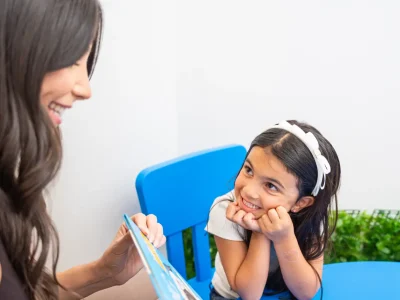
Our work in understanding and using language is designed exactly for this kind of question, where a short assessment can tell you far more than guesswork.
Movement and physical skills
Gross motor skills are firing up. Most children at 2.5 can run with more control, kick a ball, walk up and down stairs while holding a rail, and climb onto furniture with confidence that occasionally outpaces their judgement. Jumping with both feet leaving the ground often appears around now too.
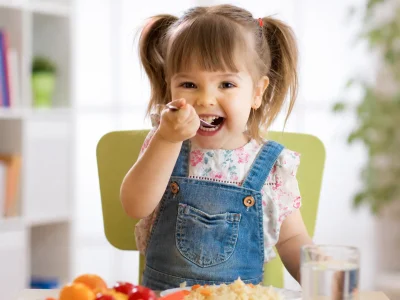
Fine motor skills are growing alongside. Your child may be building a tower of six or more blocks, turning the pages of a book one at a time, scribbling with a crayon held in a fist, and starting to feed themselves with a spoon with less mess than before.
Many begin showing a preference for one hand, though a firm right or left hand dominance can take longer to establish.
Social, emotional and play
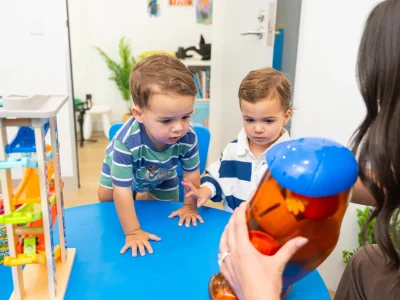
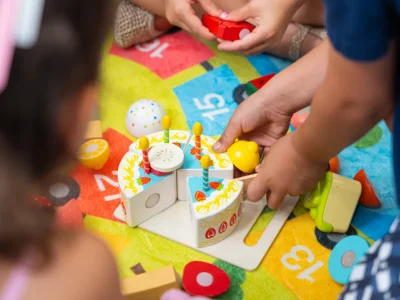
Play is where a lot of this development shows itself. Pretend play blossoms at 2.5, so you might see your child feeding a teddy, pretending to talk on the phone, or acting out a trip to the shops. This kind of make-believe is a strong indicator of healthy cognitive and language growth, because it shows your child can hold ideas in mind and represent one thing as another.
Socially, most children this age play alongside other children rather than truly with them, which is called parallel play, and that is exactly right for the stage. Sharing and turn-taking are still emerging, so expect plenty of “mine”. Big emotions are part of the package too. Tantrums peak around this age precisely because your child now has strong wants and opinions but not yet the language or self-control to manage them. Naming feelings for your child, such as “you’re cross because we’re leaving the park”, helps them make sense of what they are feeling.
Simple ways to support development at home
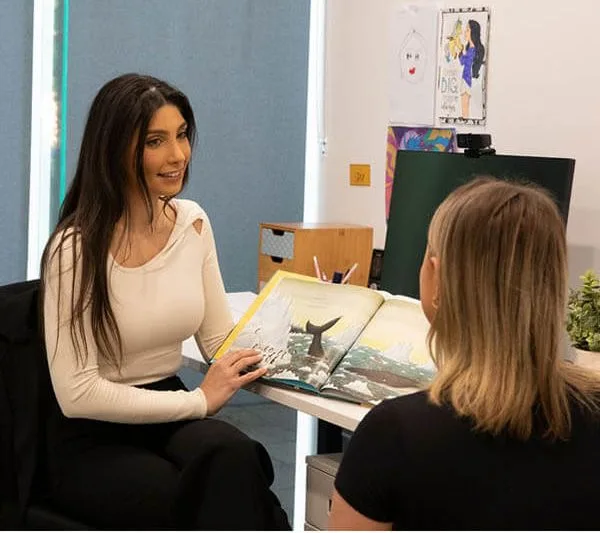
You do not need flashcards or a busy schedule. Everyday moments do the heavy lifting. Talk through what you are doing as you do it, read together each day and let your child turn the pages, and follow their lead in play rather than directing it. When your child says a short phrase, repeat it back with a little more added, so “big dog” becomes “yes, a big brown dog”. These small back-and-forth exchanges are some of the most valuable language input a toddler can get, and they cost nothing but your attention.
When to seek advice
Milestones are guidelines, so a single skill arriving late is rarely cause for worry on its own. That said, it is worth chatting to your GP, child health nurse or a speech pathologist if by around 2.5 years your child is not putting two words together, is very hard to understand most of the time, is not showing interest in other children or pretend play, or has lost skills they previously had.
Trusting your instinct matters here. Parents know their child best, and early support is almost always easier and more effective than waiting to see.
If something feels off, you do not have to sit with the uncertainty. A friendly, no-pressure conversation with a paediatric speech pathologist can give you a clear picture of where your child is at and what, if anything, would help. Get in touch with our Balmain clinic and we will happily talk it through with you.