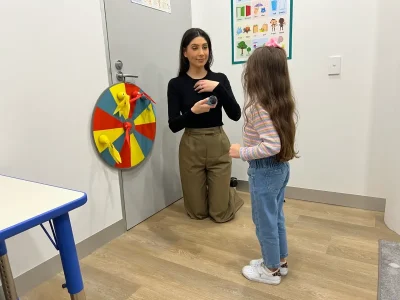
Friday they were fine. By Monday they are getting stuck on the first sound of half their sentences, and you are replaying the weekend trying to work out what happened.
This is one of the most common calls our Balmain clinic takes, and the first thing worth saying is that nothing is wrong with your memory. It really did appear that quickly. The second thing is that the answer parents most want, some event they can point to, is usually not the answer.
Sudden is how stuttering normally starts
Parents expect a gradual slide. Most stuttering does not work that way. A large share of children who begin stuttering do so abruptly, sometimes over a single weekend, going from smooth speech to noticeable repetitions and blocks with nothing obvious in between.
So the suddenness itself is not the concerning part. What we listen to is the pattern. Repeating whole words and phrases with no tension, such as “I want, I want to go”, is common in ordinary development. Repeating parts of words, stretching sounds out, or blocking where nothing comes out at all is the pattern that points to stuttering.
Sudden onset also tends to be followed by variability. A stutter can be heavy for a week, almost disappear for the next, then return. That fluctuation is typical and it is not a sign that it has resolved.
When it is a stutter coming back
A good number of the five year olds we assess are not new to this. They had a period of bumpy speech at three, it settled within a few months, everyone relaxed, and now it has returned.
That reappearance is worth taking seriously. A stutter that has come back after resolving, or one that starts later in the preschool years, is less likely to sort itself out than a first episode at two or three. It does not mean it will persist, but it does shift the odds enough that we would rather assess than wait.
If stuttering runs in your family, and it very often turns out to when we ask directly, that shifts the picture again.
The rare situations that need a GP first
Almost all sudden stuttering at five is developmental, and that is the presentation we see. There are two exceptions worth knowing about.
Stuttering that begins immediately after a head injury, seizure, illness or any neurological event needs medical review rather than a speech appointment first. The same applies if the change in speech comes with other new symptoms such as weakness, coordination difficulties, drooping on one side of the face, or a marked change in behaviour.
Speak to your GP promptly in either case. Outside of that, a speech pathology assessment is the right first step and you do not need a referral to book one.

What to do over the next fortnight
Small changes at home matter more than most parents expect.
- Let them finish. Do not complete words or sentences for your child, even when you can see where it is going and it is taking a while.
- Drop the coaching. “Slow down”, “take a breath”, “start again” and “think about what you want to say” all increase tension and self-consciousness. They are the most common advice and the least helpful.
- Slow your own speech instead. Modelling an unhurried pace is far more useful than asking your child to change theirs.
- Respond to the message, not the delivery. Keep normal eye contact and react to what they said. Children read your face fast.
- Reduce speaking pressure at the busiest times. Fewer rapid-fire questions after school, more space in the conversation, one person talking at a time at dinner.
- Note what you observe. Roughly when it started, whether it is easing or building, and whether there is any physical effort such as eye blinking, facial tension or a visible push to get words out.
Why five is not the age to keep waiting
The advice to give it six to twelve months is still circulating, and it does not match how Australian clinics work now.
Nobody can predict which children will recover naturally, and the years before school are where treatment is most effective. At five you are at the outer edge of that window. Once a child is well into school, the same stutter usually takes longer to shift and tends to arrive with a layer of self-consciousness that was not there earlier.
The stuttering speech therapy programs we run, including the Lidcombe Program developed here in Sydney and the Westmead Program for children who need a different approach, were built specifically for this age group and are delivered by parents at home with weekly coaching from us.
If your child is already commenting on their speech, avoiding words, going quiet at school or letting a sibling answer for them, that moves it from monitor to book.
Getting it looked at
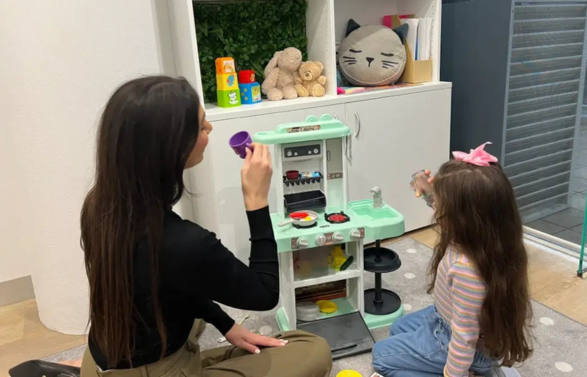
An assessment is one appointment and it is mostly listening. We take a speech sample, grade the severity, work out which type of disfluency is present, ask about family history and how your child feels about their own talking, then give you either a monitoring plan with a review date or a treatment recommendation with a realistic timeframe.
Either outcome is better than another term of counting stutters at the dinner table.
Our speech pathologists work with children aged 0 to 16 across Balmain and the Inner West, in clinic or by telehealth, and we accept NDIS, Medicare and private health rebates. Get in touch with our team to book a fluency assessment or to talk through what you have been hearing at home.