Babbling at three is a different signal to babbling at one
Babbling is meant to happen. Between roughly six and twelve months, babies practise strings of sounds like “bababa” and “dadada”, and that practice builds the motor patterns and sound awareness that words are later assembled from. It is a healthy, necessary stage.
By three, most children have moved through it. They still make sound effects and nonsense noises during play, which is normal and fun, but their main way of getting a message across is words. When babbling is still doing the heavy lifting at three, it usually means one part of the system has not come together yet. That is the useful part of the observation.
Your child is communicating, they are motivated, and they want to be heard. The sounds are there. What is missing is the step where sounds get mapped onto meaning reliably enough to be understood.
What language typically looks like by age three
Most three year olds use a large and growing vocabulary, string words into short sentences of about three to five words, ask a lot of questions, and can be understood by people outside the family most of the time. Their speech is not perfect. Sounds like “s”, “r”, “th” and “l” often stay tricky for a good while yet, and that is expected.
The comparison worth making is not whether your child sounds like the most talkative kid at daycare. It is whether they are using words at all to request, comment, protest and connect, and whether the number of words they use is growing month by month. A child who has stalled is telling you something different to a child who is slow but steadily adding words.
Common reasons a three year old is still babbling
Play is where a lot of this development shows itself. Pretend play blossoms at 2.5, so you might see your child feeding a teddy, pretending to talk on the phone, or acting out a trip to the shops. This kind of make-believe is a strong indicator of healthy cognitive and language growth, because it shows your child can hold ideas in mind and represent one thing as another.
Socially, most children this age play alongside other children rather than truly with them, which is called parallel play, and that is exactly right for the stage. Sharing and turn-taking are still emerging, so expect plenty of “mine”. Big emotions are part of the package too. Tantrums peak around this age precisely because your child now has strong wants and opinions but not yet the language or self-control to manage them. Naming feelings for your child, such as “you’re cross because we’re leaving the park”, helps them make sense of what they are feeling.
Simple ways to support development at home
Expressive language delay
Some children understand a great deal but cannot yet get words out. They follow instructions, find objects when asked, and clearly know what is going on around them. This gap between understanding and speaking is one of the more common patterns we see, and it responds well to targeted therapy.
Hearing difficulties
Repeated ear infections and glue ear are very common in early childhood and can muffle speech during exactly the period a child is learning to decode it. Hearing can fluctuate, so a child may seem to hear perfectly some days and not others. A hearing check is one of the first things worth arranging.
A motor speech difficulty
For some children, the message from the brain to the mouth is not travelling smoothly. Words come out inconsistently, the same word sounds different each time, and long words fall apart. Childhood Apraxia of Speech is a specific diagnosis of this kind, and it needs a particular style of therapy rather than a general one.
Broader developmental differences
Sometimes limited speech sits alongside differences in eye contact, joint attention, pretend play or responding to their name. That does not automatically point to autism, but it does mean an assessment should look at the whole communication picture rather than word count alone.
The practical point is that these causes look similar from the outside and are told apart by assessment, not by waiting. This is exactly what a paediatric speech therapy for toddlers and preschoolers assessment is designed to sort out, and in our clinic it usually takes one relaxed, play-based session to get clarity.
Signs it is worth booking an assessment now
Book an assessment if your three year old is using very few real words, is not putting two words together, is mostly understood only by you, shows frustration or meltdowns when they cannot get their message across, has stopped adding new words, or has lost words they used to say. Losing previously used words is always worth checking promptly.
You do not need a referral, and you do not need to be certain there is a problem. Ruling something out is a perfectly good reason to come in.
What helps at home while you sort this out
Talk to your child through everyday routines, naming what you are both doing as you do it. Cut your sentences down to a length just above where your child is, so single words and short phrases rather than full explanations.
Respond to the babbling as if it were speech, then model the word you think they meant. If they hand you a cup and babble, say “drink” and give them the drink. Pause after you ask something and count silently to five before jumping in, because processing time is often the thing standing between a child and an attempt.
Reading, singing and repetition all help, and repetition matters more than variety at this stage. Reduce screen time where you can, since language grows through back-and-forth exchanges rather than passive listening.
What an assessment actually involves
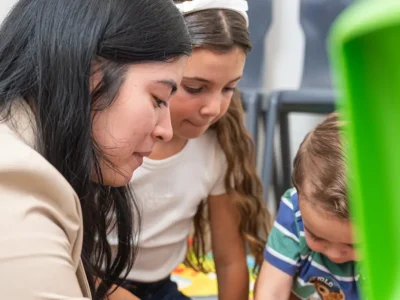
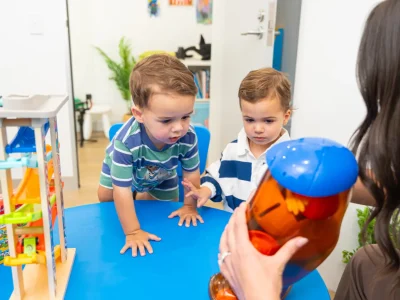
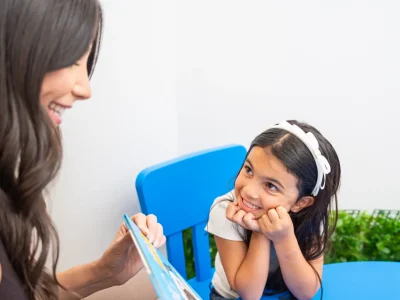
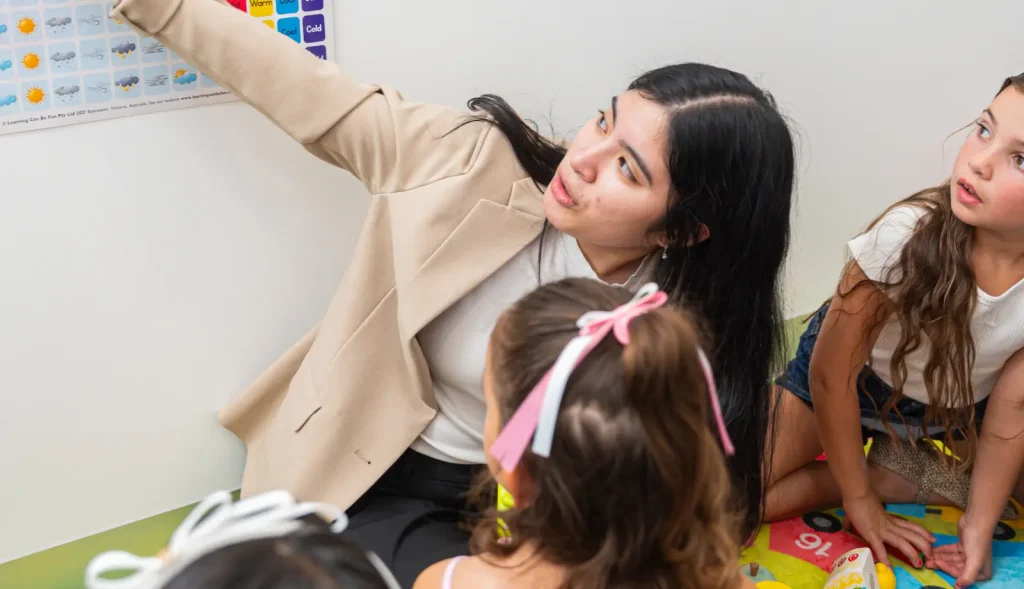
At Kids and Cubs Clinic in Balmain, a first appointment is play. We watch how your child communicates, what they understand, how they use gestures and sounds, and how they interact, then talk through your history and concerns. Where it is helpful, standardised assessment gives us a clear picture of where your child sits.
You leave with an explanation of what is happening, whether therapy is recommended, and what to do next. Our team draws on hospital and private practice experience across communication, feeding and development, and we work with NDIS, Medicare Chronic Disease Management plans and private health rebates.
If your three year old is babbling but not talking, an early conversation costs you very little and can change the next two years considerably. Get in touch with our team to book an assessment at our Balmain clinic or by telehealth.
Trusting your instinct matters here. Parents know their child best, and early support is almost always easier and more effective than waiting to see.
If something feels off, you do not have to sit with the uncertainty. A friendly, no-pressure conversation with a paediatric speech pathologist can give you a clear picture of where your child is at and what, if anything, would help. Get in touch with our Balmain clinic and we will happily talk it through with you.