You have noticed your toddler getting stuck on words, and you have decided to book a speech pathology assessment. That is a big step, and it is completely normal to feel a little nervous about what the appointment will involve.
Many parents tell us they worried their child would be put “on the spot” or tested like a school exam. The reality is much gentler than that. Here is a walk-through of what a toddler stuttering assessment looks like at our Balmain clinic, from the moment you book to the plan you leave with.
Before the Appointment
You do not need a GP referral to book a private speech pathology assessment. If you plan to use Medicare under a Chronic Disease Management plan, though, you will need to speak with your GP first. We also accept self-managed and plan-managed NDIS funding, and private health rebates depending on your cover.
In the days before the visit, it helps to jot down a few notes:
- When you first noticed the stuttering, and whether it started suddenly or gradually
- Whether it seems to come and go, or has stayed about the same
- Any family members who stutter or used to stutter
- Situations where it seems better or worse, such as when your child is tired or excited
Toddlers do not always talk on cue, so some families also bring a short phone video of their child chatting at home. It is not essential, but it can give us a useful picture of everyday speech.
Starting With a Conversation
Most assessments begin with a relaxed chat with you while your child settles into the room with some toys. We ask about your child’s development, their speech and language so far, their health, and what you have noticed about the stuttering.
Family history is one of the first things we cover, because a parent or relative who has stuttered can change how closely we monitor a child. We also want to know how you feel about it. Some parents are mildly curious, others are quite worried, and both are perfectly valid starting points.
Play-Based Observation
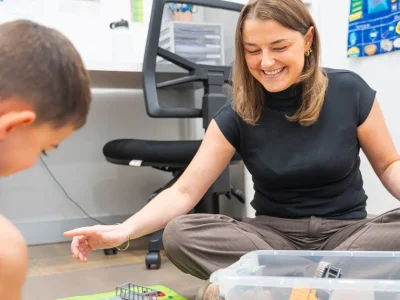
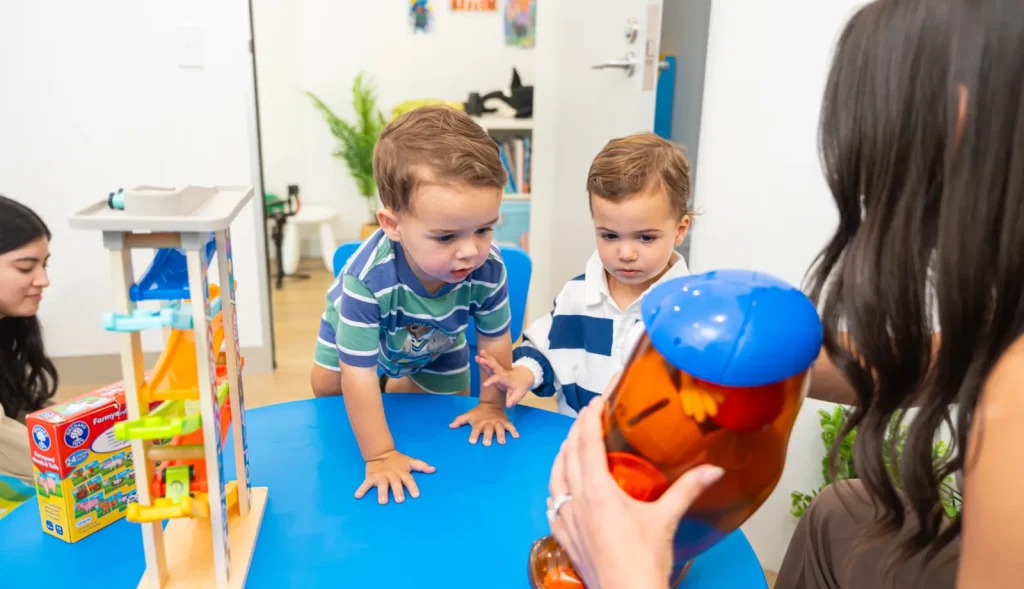
For toddlers, the assessment is built around play. Your child might build with blocks, play with a farm set, read a picture book or have a pretend tea party. While this happens, we are listening closely to how they talk.
This part is designed to feel like a fun visit rather than a test. Your child will not be asked to “say it again” or practise anything difficult. In our experience, toddlers often talk most freely when they forget anyone is listening, so we follow their lead and keep things low pressure.
For many toddlers, the appointment runs for around an hour, with a written report and recommendations to follow.

What We Are Listening and Looking For
During play and conversation, a speech pathologist pays attention to several things at once:
- Types of stuttering moments: sound or syllable repetitions (“b-b-ball”), stretched sounds (“mmmmummy”) and blocks where no sound comes out
- How often it happens: whether stuttering appears in most sentences or only now and then
- Physical tension: tight lips or jaw, blinking, head movements or a rising pitch while pushing through a word
- Your child’s reaction: whether they seem unaware, frustrated, or are starting to avoid words or stop talking
- Other speech and language skills: vocabulary, sentence length, understanding and speech sounds
That last point matters. Some children who stutter also have speech sound or language needs, and knowing the full picture helps us decide what to focus on first.
Your Role in the Room
Parents are part of the assessment, not just observers. We may ask you to play and chat with your child as you normally would, because how your child speaks with you at home is what matters most.
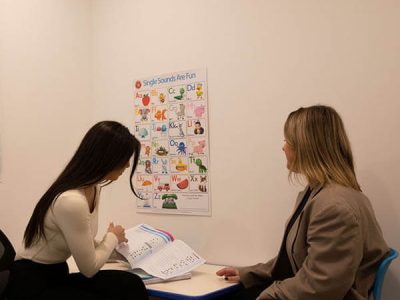
Our principal speech pathologist, Samantha Malfitano, has completed Lidcombe Program Consortium training. If the Lidcombe Program looks like a good fit, we may show you how to give a simple daily rating of your child’s stuttering at home. This helps us see how speech changes from day to day, which a single clinic visit cannot always capture.
What Happens After the Assessment
Before you leave, we talk you through what we observed and answer your questions. You then receive a written summary with our diagnostic impression and recommendations, so you have something clear to refer back to and share with family or your GP.
Depending on what we find, recommendations might include monitoring for a period, home strategies, or starting a structured program. For families who move forward with stuttering therapy for toddlers, we explain which program suits your child, how many sessions are likely, and what your role will be. Many families begin with weekly sessions of around 45 minutes, supported by short practice built into everyday routines like bath time or the drive to childcare.

Can the Assessment Be Done by Telehealth?
Yes. Stuttering assessment and the programs we use translate well to telehealth, which suits families outside the Inner West or with busy schedules. You will need a quiet space, a reliable internet connection and a parent present throughout. Toddlers often relax at home, so a telehealth session can give us a very natural sample of their speech.
Helping Your Toddler Feel Comfortable
A few simple steps can make the day easier:
- Book a time when your child is usually well rested
- Tell them they are going to play with someone new, rather than “have their speech checked”
- Bring a favourite toy or snack if it helps them settle
- Try not to worry if they are quiet at first, as we are used to warming up shy talkers
There is no way to “fail” an assessment. Its only job is to give you clear information about your child’s speech.
Book a Toddler Stuttering Assessment in Balmain
If your toddler’s stuttering has been on your mind, an assessment gives you answers and a clear next step, whether that is watching and waiting or starting support. Our paediatric speech pathologists see toddlers from Balmain, the Inner West and across Sydney, in clinic and via telehealth.
Contact our team to book your child’s stuttering assessment.