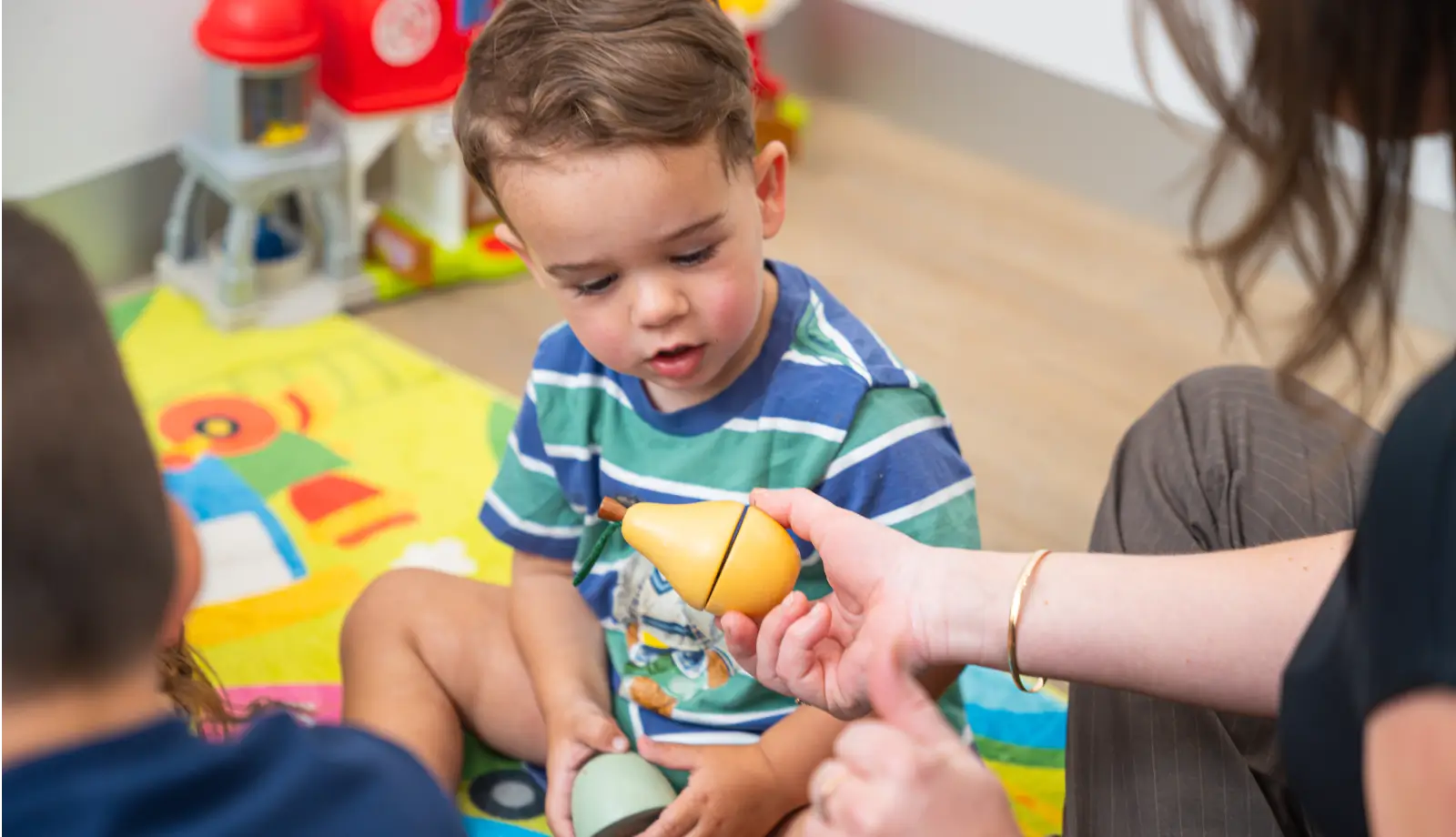
Most autistic children who achieve spoken fluency usually begin speaking in full sentences between the ages of 3 and 5, although some children develop fluent conversational speech later in childhood, around ages 6 to 8.
Research suggests that roughly 70 per cent of autistic children acquire functional verbal communication, particularly when provided with early speech therapy and tailored learning support.
Every child develops at an individual pace: while some acquire fluent spoken words early in toddlerhood, others start by using non-verbal methods or communication boards before expanding into spoken sentences.
Understanding Speech Development in Autistic Children
Speech acquisition in young children follows a wide spectrum. Standard neurotypical milestones suggest that children begin combining two or three words around two years of age.
For an autistic toddler, speech patterns often unfold differently. Some children experience speech delays, while others exhibit hyperlexia or early word repetition known as echolalia.
In Australia, families often observe early communication variations between 18 and 30 months. An autistic child might repeat phrases from favourite television shows or books with clear pronunciation, yet find spontaneous conversation demanding.
Speech fluency involves more than just reciting words; it encompasses sentence construction, tone regulation, understanding context, and back-and-forth social dialogue.
Many children who appear non-verbal in early toddlerhood make substantial progress during their preschool and primary school years.
Speech pathologists across Australia note that language growth often accelerates once a child finds effective ways to express their needs and thoughts.
Key Factors That Influence Language Development
Several elements shape when and how an autistic child acquires fluent spoken language. Access to individualised support during early childhood remains a primary influence on long-term communication outcomes.
First, early intervention programs play a major part. When families connect with registered speech pathologists through early childhood intervention services, children receive targeted activities that build language foundations. Engaging with home learning resources from Kids and Cubs can also support parents in building structured, play-based communication routines in daily family life.
Second, cognitive abilities, receptive language skills, and motor planning capacity affect verbal expression. Receptive language refers to how well a child understands spoken words, even if they cannot speak them yet. Children with strong receptive skills often make rapid gains in speech fluency once motor coordination for speech improves.
Third, alternative and augmentative communication (AAC) tools provide vital bridges to spoken speech. Using visual cards, speech-generating devices, or sign language does not delay verbal speech. On the contrary, AAC lowers communication frustration, encouraging children to produce spoken words when they feel ready.
Navigating Support and Funding in Australia
For Australian parents noticing speech differences, early consultation with a general practitioner or paediatrician is the recommended first step. A formal diagnosis or developmental assessment opens access to early intervention pathways, including support through the National Disability Insurance Scheme (NDIS).
Under the NDIS Early Childhood Approach, children aged under seven do not always require a formal diagnosis to access funded allied health supports. Speech pathology, occupational therapy, and developmental therapy can be arranged to target specific communication goals.
When building daily learning environments at home, families often use practical tools from Kids and Cubs to complement formal therapy sessions and keep language practice engaging.
Consistency across therapy settings, school classrooms, and home environments creates the best setting for speech development.
Celebrating every small communication milestone, whether a new single word, a gesture, or a clear sentence, builds confidence in young learners.
Give Your Child the Support They Deserve
Every autistic child’s speech journey looks different, and the right guidance can make all the difference. At Kids and Cubs Clinic, our experienced Paediatric Speech Pathologist in Sydney creates personalised, play-based therapy plans that help your child build language, confidence, and connection at their own pace.
Helping Your Child in Sydney's Inner West
You don’t have to untangle this on your own. Our child speech pathologist supports children aged 0 to 16 with evidence-based, family-centred therapy, and we’ll help you make sense of NDIS, Medicare, and private health funding along the way.
Get in touch with Kids and Cubs Clinic to book an assessment and find out exactly what your child needs.
Frequently Asked Questions
Can a non-verbal autistic child speak later in life?
Yes, many autistic children who do not speak by age four or five go on to acquire spoken language later in childhood. Studies show that a significant proportion of non-verbal children build functional or fluent speech between the ages of 5 and 10 with sustained therapeutic support.
Does using speech devices stop a child from learning to speak?
No, research demonstrates that alternative communication tools, such as speech-generating apps or PECS (Picture Exchange Communication System), actually assist speech development. These tools reduce frustration and help children understand language structure, which frequently aids verbal speech over time.
When should Sydney parents seek a speech pathology assessment?
Parents should consult a GP or speech pathologist if their child is not babbling by 12 months, uses fewer than six words by 18 months, or has not combined two-word phrases by two years. Early support produces the most positive long-term outcomes.