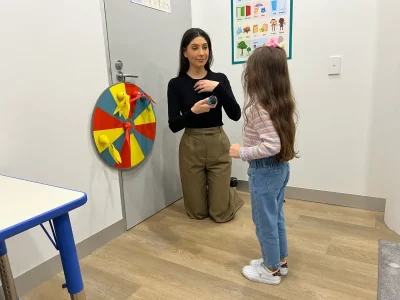
If you have noticed your three-year-old getting stuck on sounds or repeating words, you are not alone. Stuttering at this age is one of the most common worries parents bring to our Balmain clinic, and as paediatric speech pathologists, we sit with families through this conversation almost every week. The short answer is yes, a degree of stuttering can be a normal part of speech development for many three-year-olds. The longer answer matters too, because some children will benefit from early support.
What stuttering looks like at age three
Stuttering shows up in a few different ways at this stage. You might hear your child repeat sounds (“b-b-b-ball”), repeat whole words (“can I, can I, can I have it”), or stretch sounds out (“sssssnake”). Some children pause silently with their mouths open before a word will come out. These pauses are called blocks.
When we assess fluency in a three-year-old, we listen for which of these patterns is dominant, because it helps us understand whether the speech system is simply catching up or whether something more persistent is starting.
In our experience, parents usually start to worry when the stuttering appears suddenly, almost overnight. That sudden onset is more common than a gradual one and it can feel alarming. The good news is that a sudden onset on its own is not a sign of severity.
Why does stuttering often start around this age
Between two and five, your child’s brain is doing remarkable work. Vocabulary is growing fast, sentences are getting longer, and grammar is starting to lock into place. Three is right in the middle of that leap.
A young child’s thinking can race ahead of the motor planning needed to coordinate the lips, tongue, and breath for speech. When that mismatch happens, you get repetitions and pauses while the system catches up. Tiredness, excitement, illness, or the arrival of a new sibling can all make stuttering louder for a while.
Genetics also plays a role. If you, your partner or a close relative stuttered as a child, your three-year-old has a higher chance of doing the same, which is why family history is one of the first things we ask about during an assessment. Boys are also more likely to stutter than girls.
Signs your child is having a typical dysfluency
Many children move through a brief patch of bumpy speech and come out the other side without any treatment. Typical features look like this:
✓ Repetitions of whole words or short phrases rather than single sounds
✓ Bumps that come and go from day to day
✓ Your child does not seem aware or bothered by the dysfluency
✓ No visible tension in the face or body when speaking
✓ Speech is still mostly easy to understand
If this is the pattern you are seeing, your child may well settle on their own. In the clinic, we like to watch fluency across a few different settings and a few different days before making a call, because a single bumpy afternoon does not give us the full picture. No speech pathologist can predict with certainty which children will recover naturally, which is why monitoring matters.
When to book a speech assessment
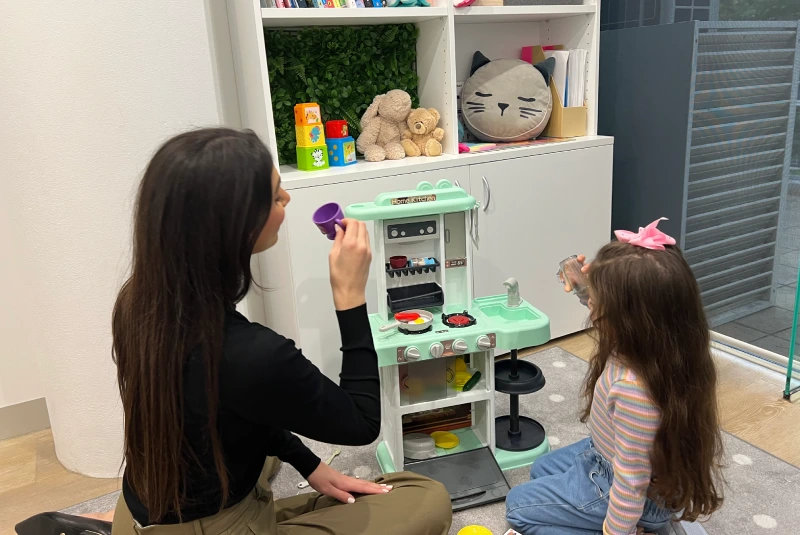
Some signs suggest your child would benefit from early intervention. These include stuttering that has lasted longer 3 months, stuttering that is getting worse rather than better, sound and syllable repetitions (“b-b-b”) more than whole-word repetitions, prolonged sounds, blocks where no sound comes out, facial tension, eye blinking or jaw movement during speech, and any sign that your child is becoming aware of their stutter or starting to avoid certain words or situations.
If you are noticing any of these, our team offers paediatric stuttering therapy using the Lidcombe Program, which is the evidence-based gold standard for preschoolers and was developed right here in Sydney. Early treatment gives the best outcomes, and waiting too long can make therapy harder once a child starts school.
What you can do at home today
A few small changes in how the family talks can make a real difference while you decide on next steps. Try slowing your own speech down when you talk with your child, since they tend to mirror the pace they hear.
Give them your full attention so there is no rush to get the words out. Avoid finishing their sentences or telling them to “slow down” or “start again”, as that can build self-consciousness. Praise the message, not the speech.
These are the same parent strategies we coach families through in their first Lidcombe sessions, so starting them at home now is never wasted. Stuttering tends to fluctuate, so try not to react when a bumpy day comes along.
Talk to a paediatric speech pathologist in Balmain
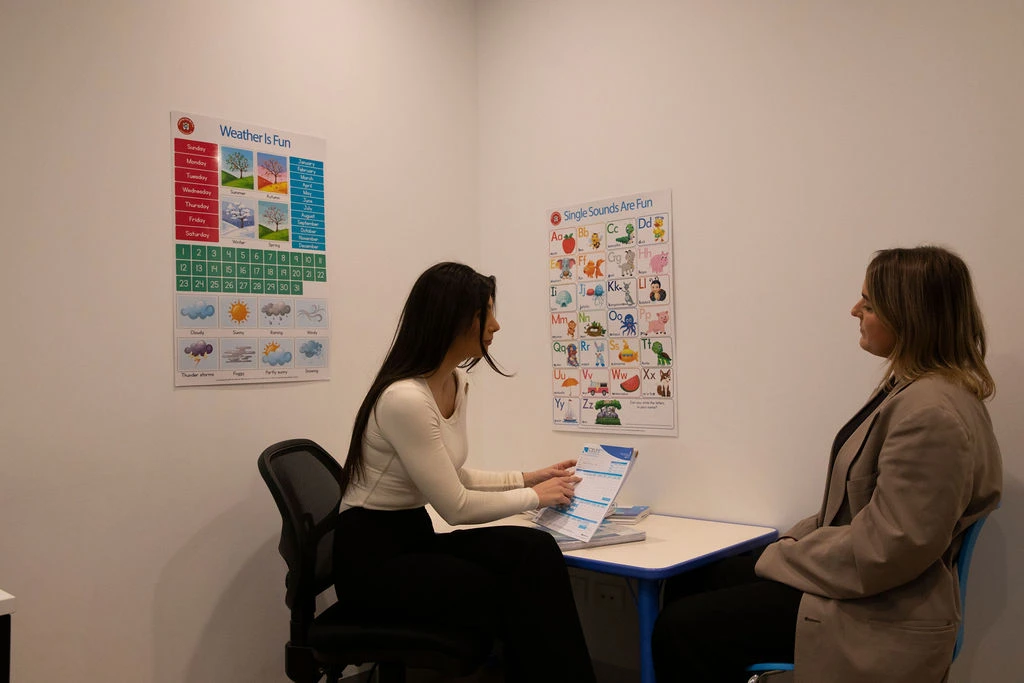
A short assessment is the clearest way to know whether your child’s stuttering is part of typical development or a sign to start therapy. If you have been watching and wondering, you do not need a GP referral to come and see us. Get in touch with our team to book an appointment, and we will help you work out the right next step for your child.