If your child isn’t talking as much as other kids their age, your mind can race to the worst case pretty quickly. Plenty of parents who walk into our Balmain clinic have spent late nights searching for speech delay vs autism, trying to work out which one they’re looking at. The honest answer is that the two can look similar early on, but there are real differences once you know what to watch for.
Both can mean a child is slow to start talking. Both are far more manageable when picked up early.
The difference lies less in the words themselves and more in how a child connects with the people around them. That’s the thread we follow from a child’s very first session with us.
What Speech Delay and Autism Have in Common
It’s easy to see why these two get confused. A late-talking toddler and a young child with autism can both have a small vocabulary, struggle to follow instructions, or seem behind their playgroup friends. In both cases, you might notice the gap most when you compare your child to a cousin or a classmate the same age.
This overlap is exactly why guessing from a checklist online rarely settles anything. What matters is the bigger picture of how your child communicates, not just how many words they have. In our sessions, two children with the same vocabulary often turn out to be telling very different stories.
Speech Delay vs Autism: The Key Difference
When we look at speech delay vs autism, the clearest dividing line is communicative intent. In other words, does your child want to connect, even when the words aren’t there yet?
A child with a speech delay usually still tries hard to get their message across. They point, pull you by the hand, make eye contact, bring you toys, and get frustrated when you don’t understand. The drive to communicate is there. The words are simply running late.
Autism tends to show up as a broader difference in social communication. A child might not respond to their name, may avoid eye contact, prefer to play alone, or use your hand as a tool rather than looking to you for help. Speech is only one part of a wider pattern.
Signs That Lean Towards Autism
No single sign confirms anything, but these are the kinds of things we pay close attention to during an assessment:
- Little response to their own name, even when hearing is fine.
Limited eye contact or shared attention with you. - Repeating words or phrases over and over rather than using them to chat.
- A strong preference for solitary play.
- Repetitive movements or distress with certain sounds, textures, or routines.
When several of these show up alongside the speech delay, it’s worth looking more closely at autism and developmental delay rather than speech alone.
Signs That Lean Towards a Speech Delay
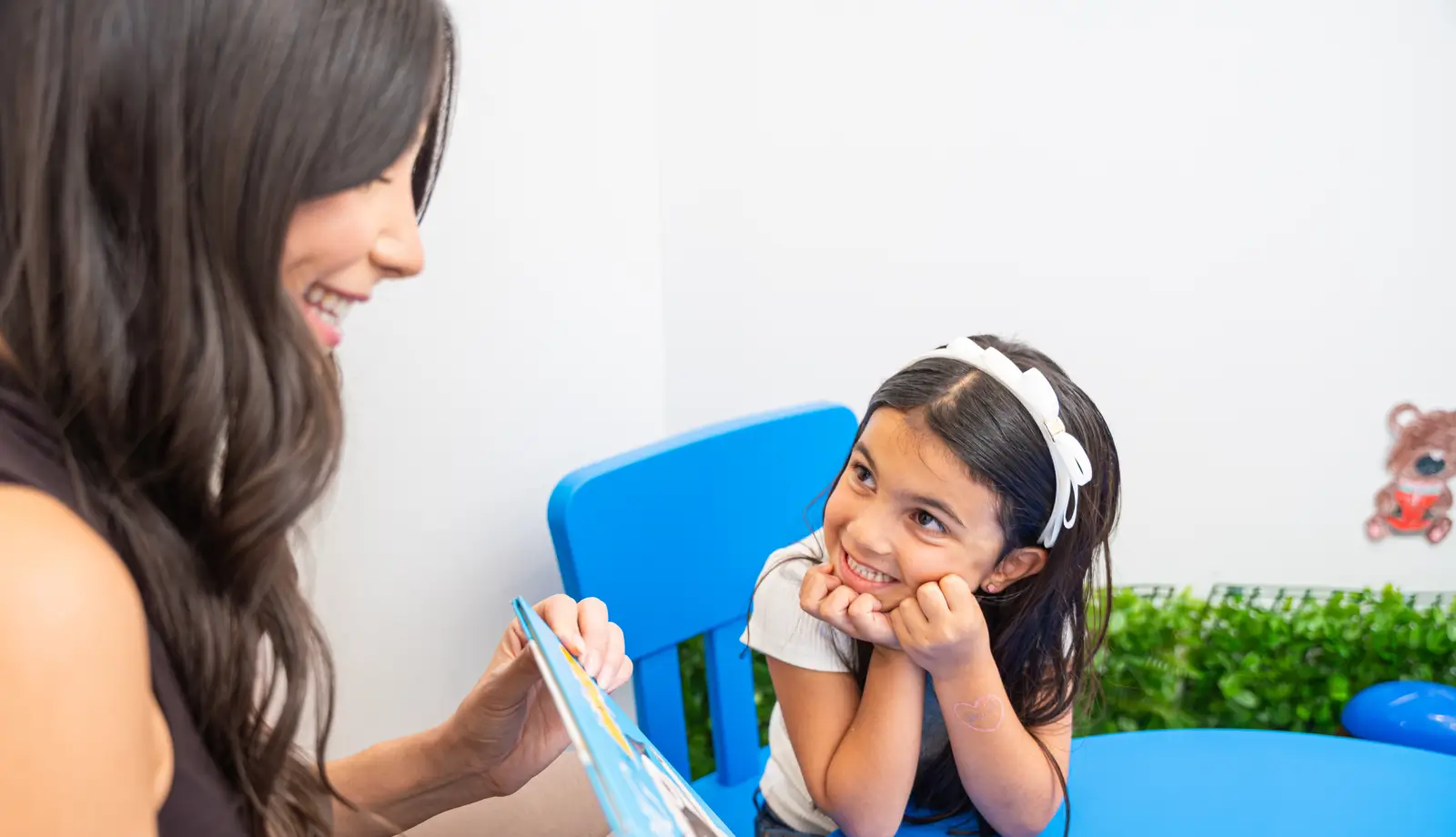
By contrast, a child whose challenge is mainly speech or language will usually keep reaching out. You’ll see them gesturing, babbling with expression, mirroring what you do, and showing clear pleasure in your company. They follow simple instructions, even if they can’t yet say much back.
The social wiring is working well. It’s the spoken output that needs support. In our experience, these are the children who often surprise everyone with how quickly they come along once therapy starts.
A child who is connecting, gesturing, and trying to be understood is showing strong social skills, whatever their word count.
Why a Proper Assessment Settles It
Here’s where it helps to stop guessing. During a speech and language assessment, we watch how your child plays, listen,s and interact, then test their speech and language against what’s typical for their age. We’re not only counting words. We’re reading the whole pattern of communication to see whether you’re looking at a delay, autism, or something else worth screening for.
This is where our background matters. Our paediatric speech pathologists draw on both hospital and private practice experience, which helps us read the subtle differences a quick online quiz never could. When autism is part of the picture, we’ll talk you through the next steps and the right team to bring in.
Talk to Our Sydney Speech Pathologists
You don’t have to sit alone with the worry, and you don’t need all the answers before you reach out. Our Kids speech pathologists support children aged 0 to 16 with evidence-based, family-centred therapy, and we’ll help you make sense of NDIS, Medicare, and private health funding along the way.
Get in touch with Kids and Cubs Clinic to book an assessment and get clear answers about your child.