If you’re wondering when your toddler will say their first words, you’re not alone. As parents in Sydney’s Inner-West, we hear this question almost every day at Kids and Cubs Clinic. While every child develops at their own pace, understanding typical speech milestones can help you know what to expect and when to seek support.
Understanding Typical Toddler Speech Milestones
Most toddlers say their first meaningful words between 12 and 18 months of age. Communication actually begins much earlier through babbling, gestures, and understanding. For a full breakdown of what to expect at every age, visit our Developmental Milestones page. Here’s what you can typically expect at each stage:
12 to 18 Months: First Words Emerge
By their first birthday, many toddlers start using 1–3 simple words like “mama,” “dada,” or “ta” (thanks). They’ll also wave goodbye, point at things they want, and understand simple requests like “come here” or “give me the ball.” Don’t be surprised if these early words aren’t perfectly clear — approximations count!
18 to 24 Months: The Vocabulary Explosion
Between 18 and 24 months, you’ll often notice a rapid increase in your toddler’s vocabulary. Many children learn 10–20 new words each month during this period. By age two, toddlers typically use around 50 words and start combining two words together, such as “more milk” or “daddy go.” They’re also becoming better at following two-step instructions.
24 to 36 Months: Simple Sentences Take Shape
By their third birthday, most toddlers speak in 3–4 word sentences like “I want biscuit” or “where’s my teddy?” Familiar people can understand about 75% of what they’re saying, and they’re starting to ask lots of questions, the famous “why?” The phase begins!
What Influences When Toddlers Start Talking?
Several factors affect your child’s speech development timeline, and understanding these can help you support their journey:
✓ Hearing ability matters enormously. Even temporary hearing loss from ear infections can delay speech development, so address any hearing concerns promptly with your GP or paediatrician.
✓ Social interaction is essential for language learning. Toddlers who have regular conversations, shared book reading, and back-and-forth interactions typically develop stronger language skills. This is why we encourage parents to be actively involved in therapy sessions at our Balmain clinic.
✓ Individual temperament affects timing too. Some children are naturally more cautious and prefer to listen before speaking, while others jump right in with attempts at new words. In our years of clinical experience, we’ve seen every personality type eventually find their voice.
Signs That May Warrant a Professional Assessment
While there’s a wide range of normal development, certain signs suggest it’s time to check in with a speech pathologist. Consider booking a speech assessment if your toddler:
✓ Isn’t babbling or using gestures by 12 months
✓ Has fewer than 10 words by 18 months
✓ Doesn’t combine two words by 24 months
✓ Struggles to follow simple instructions
✓ Has lost words or skills they once had
✓ Shows frustration when trying to communicate
✓ Rarely makes eye contact during interactions
Early intervention makes a real difference. Toddlers who receive timely support often achieve better outcomes academically and socially, which is why we focus so heavily on those early years. If you’re unsure whether your child’s development warrants concern, our FAQ page answers many of the questions families ask us most.
Practical Ways to Encourage Your Toddler's Speech
As a parent, you’re your child’s most important teacher. Here are strategies we recommend to families every day:
✓ Talk throughout the day — Narrate what you’re doing as you cook, dress your child, or run errands. “Let’s put on your blue shoes” or “I’m chopping the carrots” gives your toddler repeated exposure to words in context
✓ Read together daily — Even just 10 minutes of shared reading exposes your child to new vocabulary and shows them how stories work. Point to pictures, ask questions, and let them turn the pages
✓ Follow your child’s lead — When they show interest in something, talk about it. If they point at a dog, expand on that: “Yes, that’s a big brown dog! The dog is running. Woof woof!”
✓ Give them time to respond — Instead of filling every silence, pause after asking a question. Even if they don’t answer with words yet, they’re learning the rhythm of conversation. This pause can feel uncomfortable at first, but it’s one of the most powerful strategies you can use
✓ Sing songs and nursery rhymes — The repetition and rhythm in songs like “Twinkle Twinkle” or “The Wheels on the Bus” make language easier to remember and fun to practise
For free printable home activity resources, visit our Downloads page.
How We Support Toddlers at Kids and Cubs Clinic
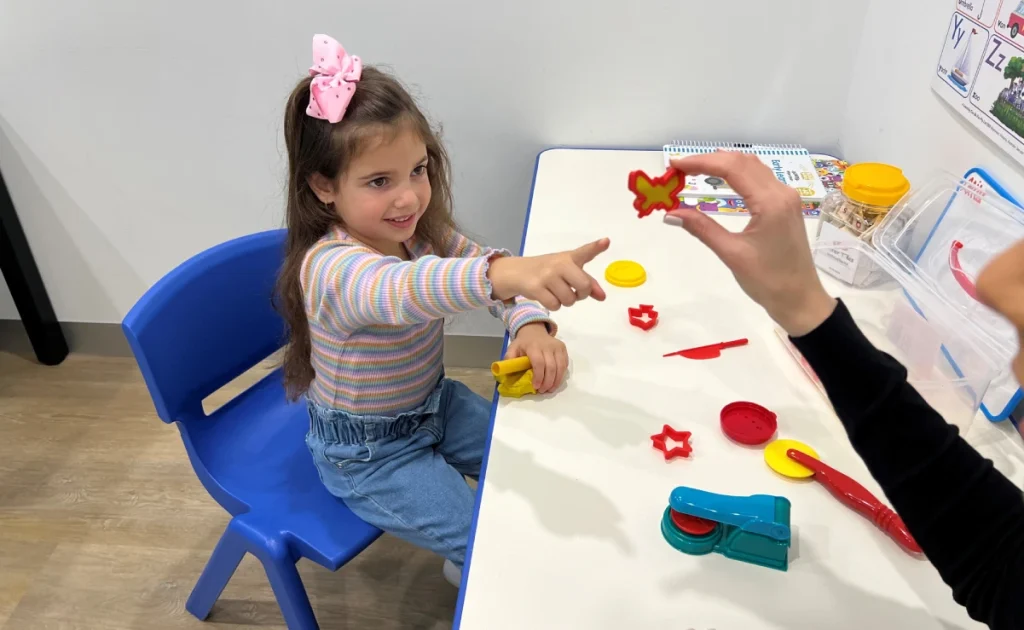
Our Balmain clinic specialises in early intervention for toddlers and preschoolers using a play-based approach. We’ve found that when therapy feels like playtime, children engage more naturally and progress faster. Learn more about our therapy for toddlers and preschoolers programme.
During a speech assessment, we’ll observe your child’s communication abilities, discuss your concerns, and conduct age-appropriate evaluations. From there, we create a therapy plan tailored to your child’s specific needs.
Our sessions focus on:
✓ Building vocabulary and understanding and using language
✓ Developing clear speech sounds through articulation therapy
✓ Encouraging word combinations
✓ Supporting children with developmental delays or autism
✓ Teaching you strategies to use at home every day
Can’t make it to our Balmain clinic? We also offer telehealth sessions for families across Sydney.
We accept NDIS funding (self-managed and plan-managed), Medicare Chronic Disease Management Plans, and private health insurance, making quality speech therapy accessible to Sydney families.
Remember: Every Child's Timeline Is Unique
If you’re comparing your toddler to others at playgroup or childcare, take a breath. Speech development varies widely, and some children are simply late bloomers. Some focus their energy on physical skills like walking or climbing before moving into language.
What matters most is progress. Is your child adding new sounds, gestures, or words, even slowly? Are they understanding more each month? These are positive signs that development is on track.
If you have concerns, though, trust your instincts. You know your child best. Seeking professional guidance brings peace of mind and, if needed, early support that can truly change the trajectory of your child’s communication development.
Take the Next Step for Your Toddler's Communication
At Kids and Cubs Clinic, we’re passionate about helping Sydney families support their children’s speech and language development. Located in Balmain and serving the Inner-West community, we work with children from birth to 16 years using methods backed by research and clinical experience.
If you’re wondering whether your toddler’s speech development is on track, we’re here to help. Those early years are so important for setting children up for success in communication, learning, and confidence.
Contact Kids and Cubs Clinic today on (02) 9166 7622 or visit our website to book a speech assessment. Let’s support your child’s communication journey together.